Camel Wrestling—NOT!

I’ve been curious about it for years. Friends have trekked to Selcuk for the famed January Camel Wrestling Championships, but both times I’ve been home in Minnesota. Well, not this year. My friend David and I started talking about camel wrestling a few months ago, and we made it happen.
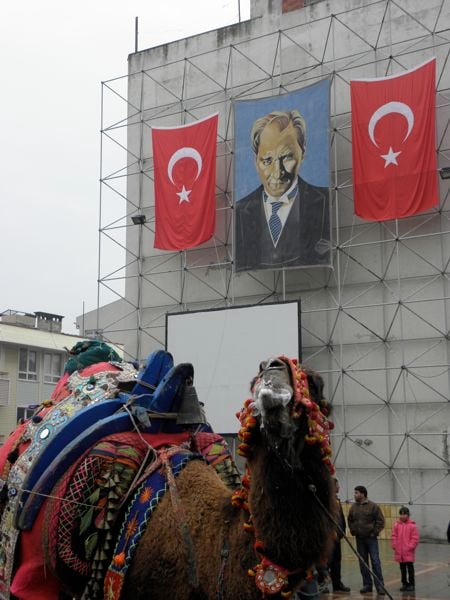
P1160142

Camels and Ataturk—how TURKISH!

Everyone met Friday night at the Sabiha Gokçen Airport (named after a female Turkish pilot) for the trek to Selçuk, near the Aegean Sea. From there we rented a 9-passenger van (and squeezed in 10 teachers from Koç and Robert) for the hour-plus ride to Selçuk (Sell-CHOOK) and Şirince (Shear-IN-jay). We dropped off a few riders in Selçuk, then headed up the winding mountain road in the dark. It was after 8:00 when we got to Şirince, and we were famished. We trekked up the stone-paved street to the Artemis, a quaint restaurant in a renovated stone school building. There we feasted on a variety of mezes, Şirince’s famous fruit wines (black mulberry and cherry), and a variety of sumptious entrees. I had köfte (meatballs) with tomato sauce and yogurt over pide bread. YUM!!! P1170221
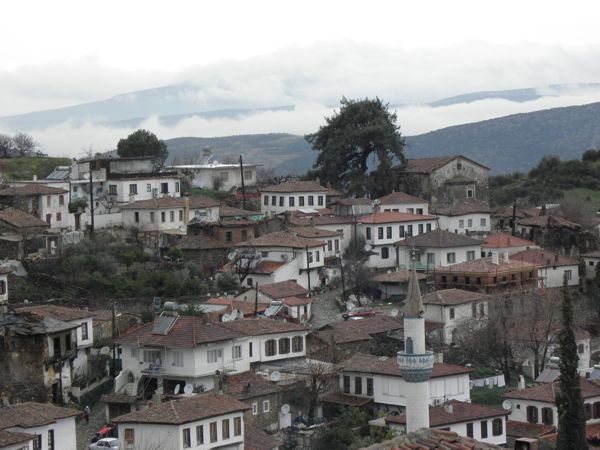
The mountain village of Şirince

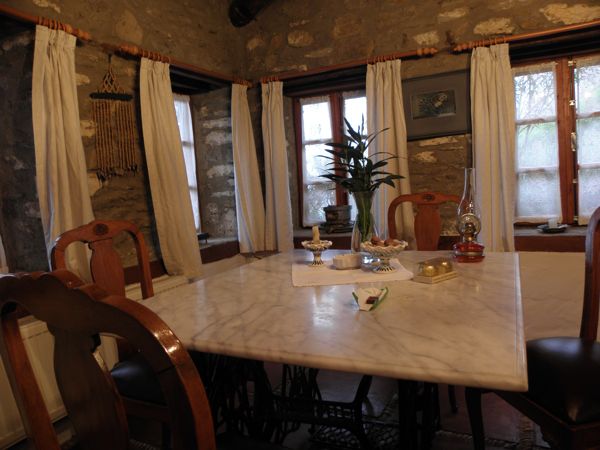
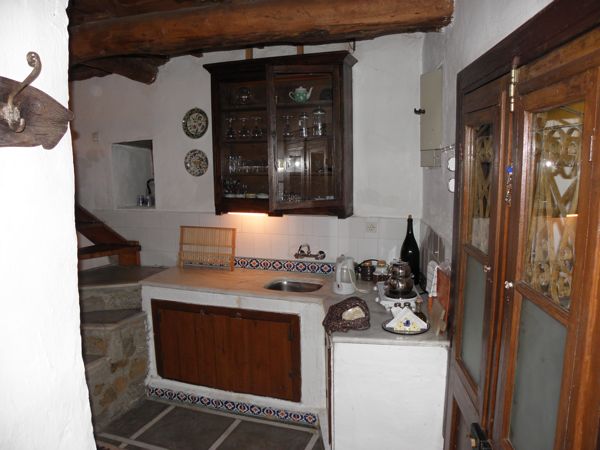
Then in for a real treat—the Nişanyan House. David drove us up yet another winding road to a precariously slanted parking lot. We picked our way down stone steps to the office—charming! A sleepy-eyed young man guided us down a steep path, many more steps, more winding, and finally to the Kerevetli Ev (Wooden Platform Bed House). We explored our historical residence room-by-room. First, the kitchen with its antique cupboards and bright ceramic trim, then the living room with its inset paned-glass windows and rounded fireplace flanked by two easy chairs. The marble-topped table was set with guidebooks, candles, and a chocolate snack.
P1150005

Our quaint kitchen

P1160010…and lovely dining area.

Up a hand-hewn circular staircase we discovered a mammoth bathroom with a timber-beamed ceiling and a skylight over a huge open marble shower. A pedestal candle sat beside the toilet. The upstairs also had a bedroom with two duvet-covered beds. Best of all, though, was the harem, where the women would have lived and slept back in Ottoman times (1250-1930). The biggest room in the house, it was surrounded with windows and a cushioned bench. A low table sat in the center of a huge Turkish rug, but the crowning glory of this room was the bed. It was a built-in curtained platform that could easily sleep five women on its ample mattress. Really.

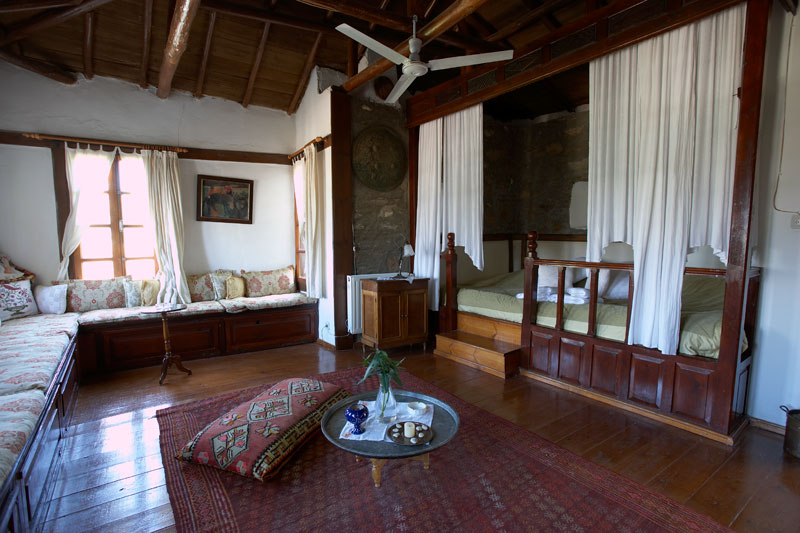
KeThe Harem with its platform bed  (photo from Nişanyan web site)

Saturday morning I was the first up, so I rooted around in the kitchen, happily discovering a French press pot and some dark-roast coffee. Yes! Breakfast waited patiently in a picnic basket on a shelf in the refrigerator. David scuffled down, and we chatted over morning coffee until the others roused. It was raining, but we were happy. Breakfast consisted of the usual tomatoes, cheese, olives, preserves, fruit, and eggs. When Anna cracked her hard-boiled egg on the table, she realized too late that it was raw. OOPS!!! We quickly rounded up the remaining eggs to scramble. The next morning Walter concocted a delicious omelet of grated potatoes, peppers, cheese, and eggs. Oh, we ate well last weekend.
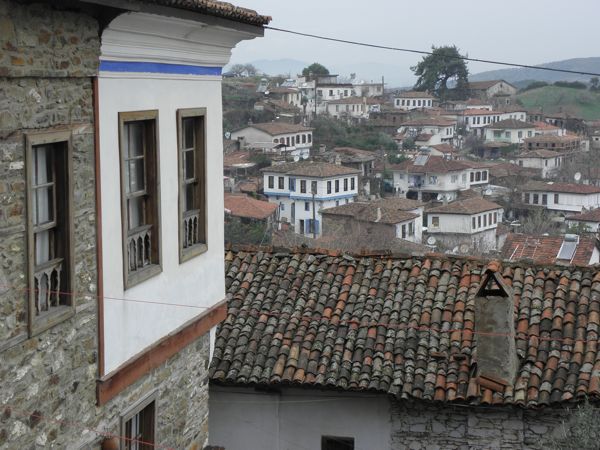
P1160021a view of Şirince from just below our house

After cleaning up, we headed for town to explore the little market area of Şirince, then hopped on the mini-bus to Selçuk where the camels would be making their appearance prior to the Sunday wrestling “match”. We meandered through the market, where we heard the distant beat of drums and horns. We followed the sound to find…drummers and pipers. No camels. Plenty of rain.
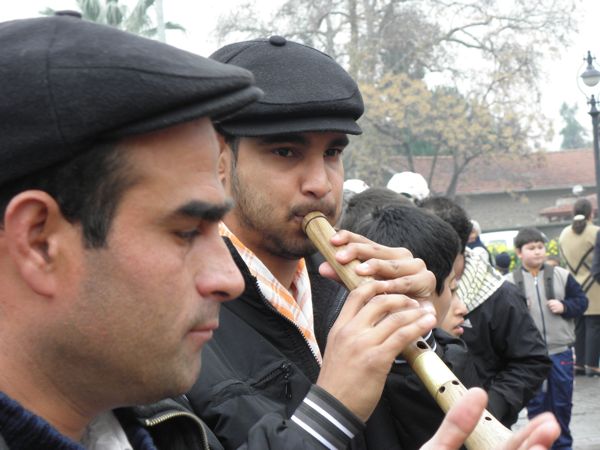
P1160155The Camel Pipers

We explored the city center, where vendors were grilling camel meat (actually very delicious—quite lean) and selling camel festival neck scarves. Well, of course we bought some.
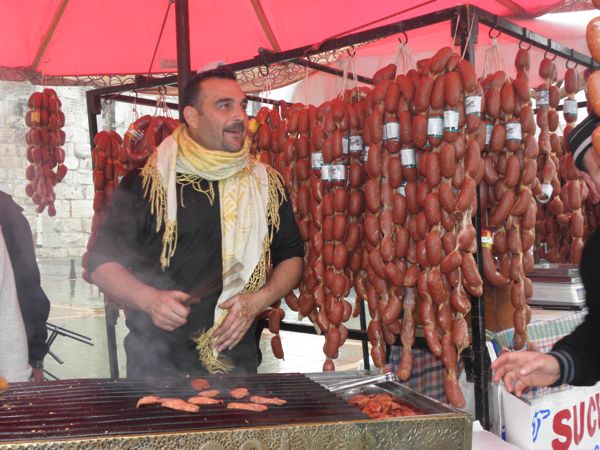
P1160065Ropes of camel sausage

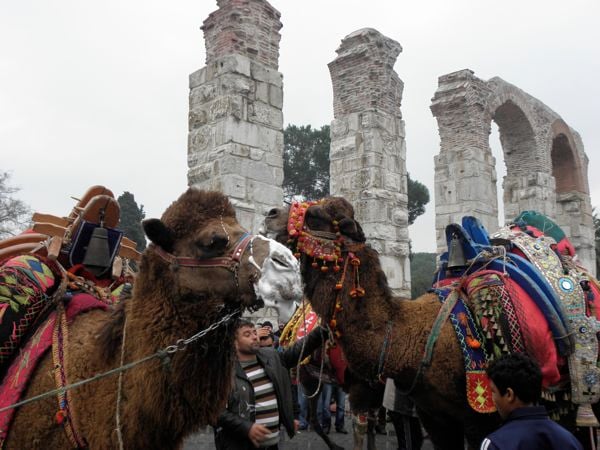
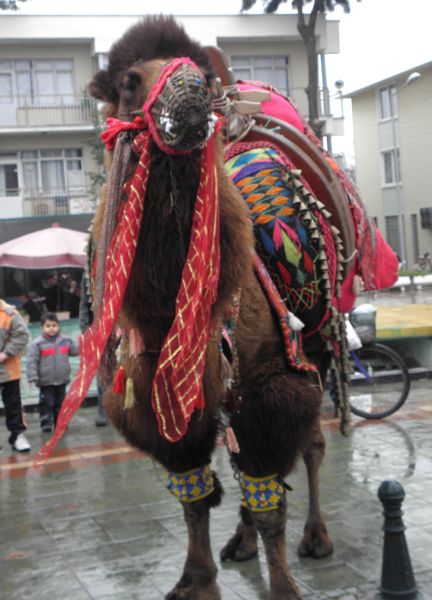
We found a restaurant and ordered lunch as well as a round of adult beverages. We decided to take advantage of the dry warmth of the restaurant and made it our big meal of the day. Before we knew it, other teachers joined our party, doubling our numbers. Hooray! Sated, we found our way back out to the street, only to discover that it had stopped raining and the camels were in the meydan (town square). HOORAY!!! We hot-footed it up there and snapped photo after photo as the drummersand pipers riled the camels with their racket.
P1160089

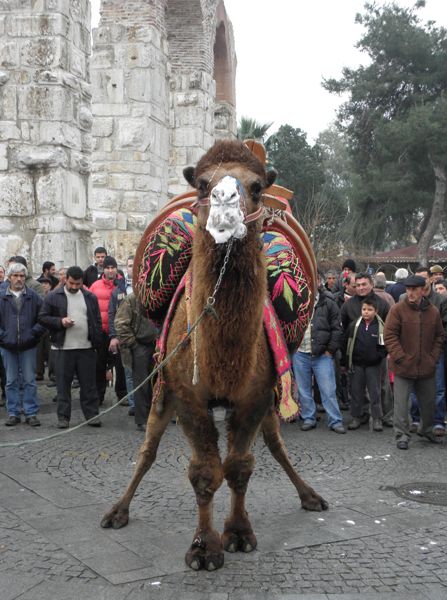
We think this guy must have been a champion–he just has that look.

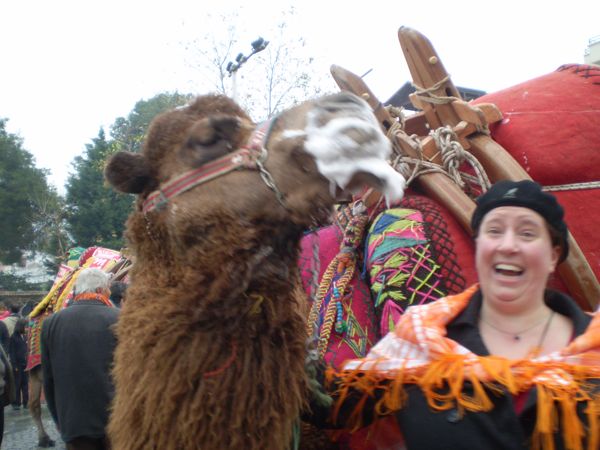
Soon they were frothing at the mouth like you wouldn’t believe. They looked like someone had slathered their noses with shaving cream, and sometimes they’d shake their heads and spew it all over the onlookers.  The camels were saddled and decorated in layers of brightly-colored felt, scarves, wool, mirrors, embroidery—you name it! P1160139Not only froth, but tiny bubbles…

P1160163

The boys milling down by the local aquaduct.
P9281442

My friend Karla  found herself a new beau!

It was clear that they were ready for action, although their drovers kept them well under control, often walking them in circles to settle them down. They often rolled their heads back and forth to the beat, just a little like dancing. One of the drovers had his camel splay his back legs to show off how stable he’d be in a match. We were impressed.
P1160156

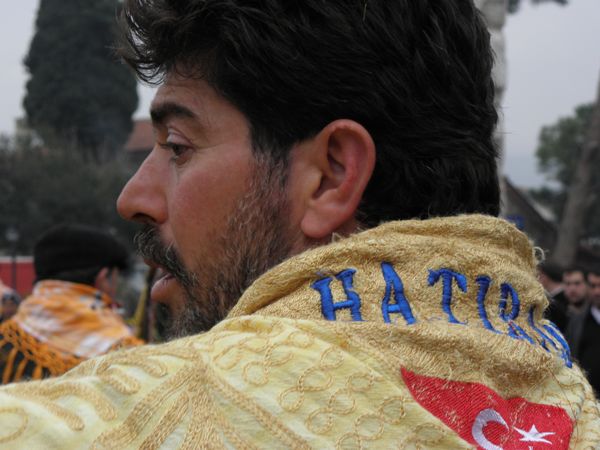
The drover of the champion camel

P1160191

And here’s a fighter’s stance!

Poor guy, though. He never got to wrestle. Sunday we woke to rain. Heavy rain. We’d been told that camels aren’t partial to rain, and if it’s raining they just mope and won’t wrestle. Yup. The whole thing was cancelled due to rain. Sigh… Saturday night we went back home and ate mezes and played word games by a crackling fire until the wine was gone and we could keep our eyes open no longer. After Sunday’s breakfast when we learned the wrestling had been cancelled, David and I took a drizzly walk through the village to visit Şirince’s two historical churches. The rain let up for a while, and we snapped photos and enjoyed the many-faceted views of this little mountain village.

P1170219

The Sunday morning clouds lifting off the mountains over Şirince
P1170226

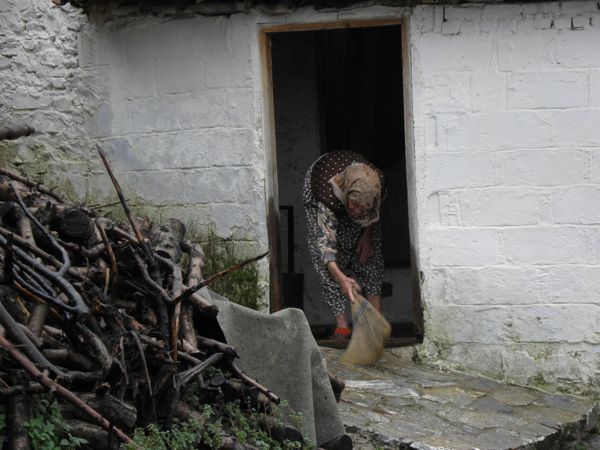
A good neighbor sweeping her front step even in the rain.

Then we went back to the house, where Walter had a crackling fire going. The others curled up with books by the fireplace, while I headed up for the cool airiness of the harem. Propped on numerous pillows in the corner by the windows, I read as the morning clouds dissipated and the sun hesitantly emerged over this quaint mountain village.

P1170275Courtney, Walter, and Anna reading by the fire

P1170292

The sun finally beams down on Şirince

We may have missed the camel wrestling, but we had a heck of a nice weekend. Şirince ROCKS!

If you’d like to see a beautifully done  multi-media piece on the 2009 Camel Wrestling in Selçuk, click this link: Camel Wrestling – Selcuk, Turkey
An erudite reading in Istanbul

I attended an erudite high-brow event at an esteemed local venue on Saturday.

Well, sort of.

My friend Duff gave a poetry reading at Molly’s Café.

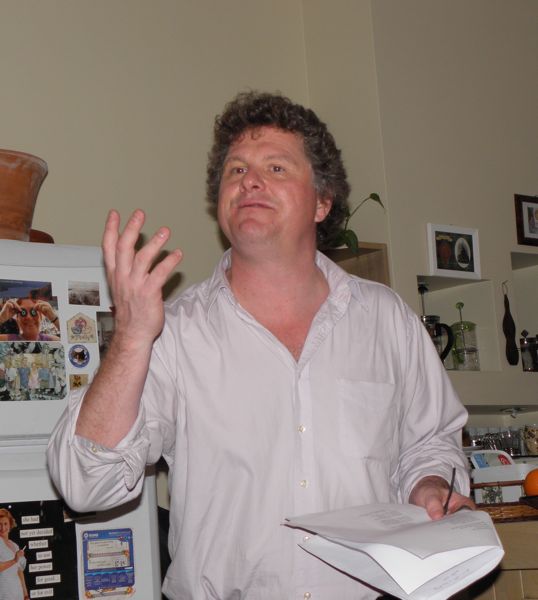
Daniel (Duff) Plunkett is in my Turkish class (a cozy group of six) and my writing group (in which I’m the token non-poet). Duff has also made appearances as Santa for the children at the Robert College Christmas party and as an enthusiastic regaler at our Mehane night in November.

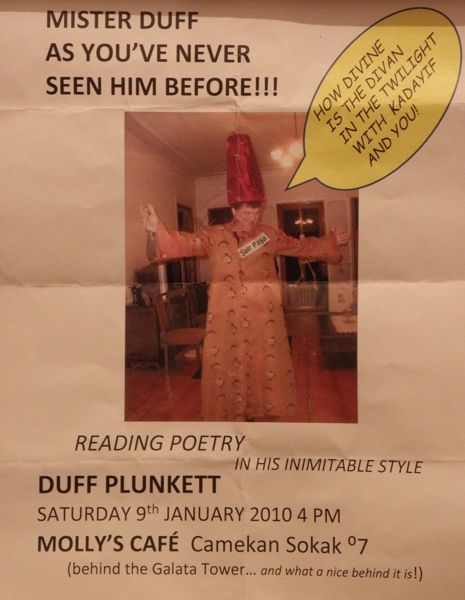
This man loves the sound of words, he loves the sense of words, he loves the depth of words. He can’t resist a play on words. Duff the punster. Duff the funster. Always. Even his poetry promotion poster poked fun as it pontificated… (sorry)

Even his poster is more humor than information

This poster packs more humor than information

Duff started writing poetry as a boy and was first published in a high school literary magazine. Apparently that felt pretty good, because he continued writing through his years at the University of Maine. He didn’t major in creative writing—or even English (he has some kind of an international agriculture-related job), but words continued to swirl through his mind. “I always thought poetry should be fun,” he said. “I sat through far too many boring poetry readings and I swore I’d never do that.”

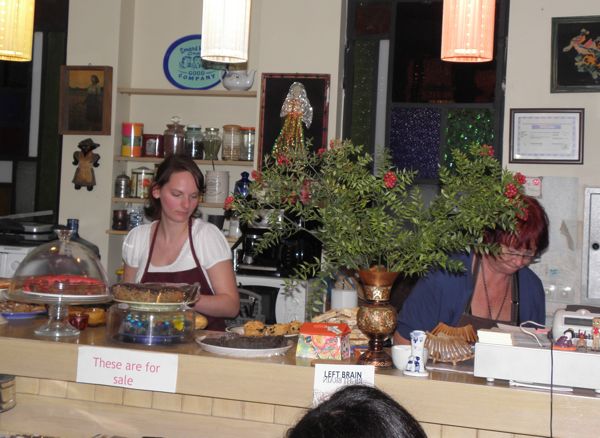
Molly (on the right) scrambling to keep things goingMolly (red hair) and her assistant running  refreshments to the eager crowd.

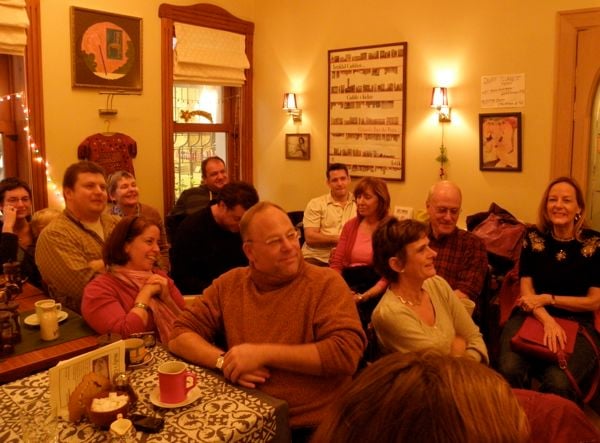
As a crowd gathered at Molly’s little antique-furnished coffee shop, she dragged chairs out of nowhere to seat the multitudes. Well, that may be a bit hyperbolic, but there were lots of folks from many circles in Duff’s life—school (his wife teaches at Robert), friends-of-friends, writing group members, basketball buddies, and even our Turkish teacher, Özlem. We all love the Duff.

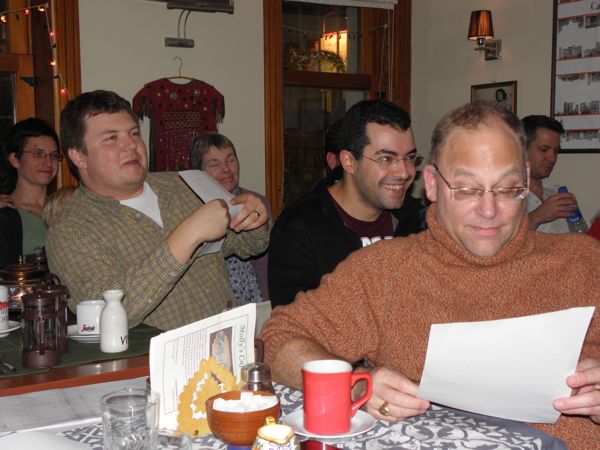
Nearaly half of the rapt admirers

Half of the enthused crowd enjoying Duff’s esoteric wanderings

Well, let me tell you, we weren’t bored. Duff’s poetry is at times gleeful, at times heady, but always interesting.

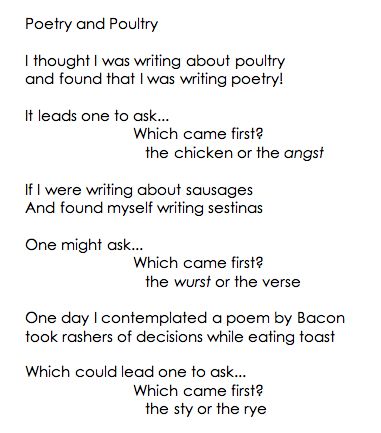
Here’s a typical example of his poetry, taken from his recent book, Right Brain, Left Brain:

Poetry or poultry

Magnifique! Ah, Magnifique! (Would that be poultry or poetry?)

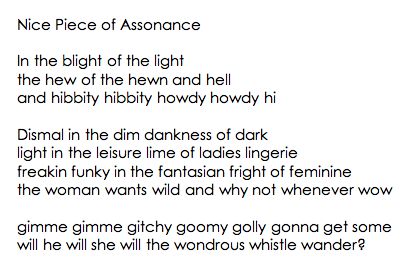
Sorry—I’m an English teacher, so I have to comment. It’s clear from the range of settings in Duff’s poems that his mind works in rhymes and couplets. He dwells in a maelstrom of puns and metaphors and alliteration.Nice piece

An enthusiastic moment

“ASSONANCE!”

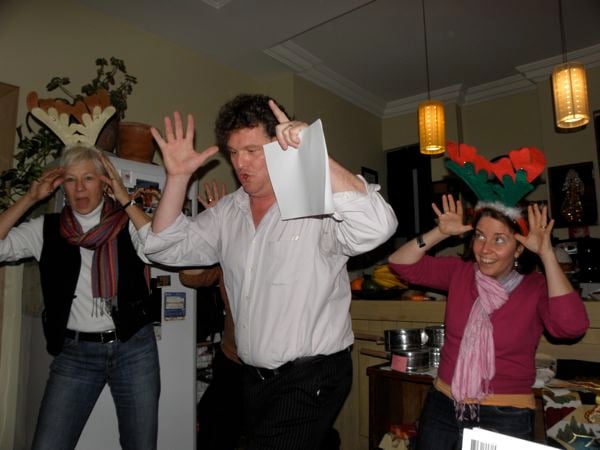
He wrote a new fight song for the University of Maine, too, enlisting some of us audience members to play the parts of the Moose brigade: “It’s a moose, moose, moose on the loose, loose, loose!” Pretty fun.

The Maine Mooses

“Moose on the loose” Yup, that’s me in the back row. A Minnesota Moose.

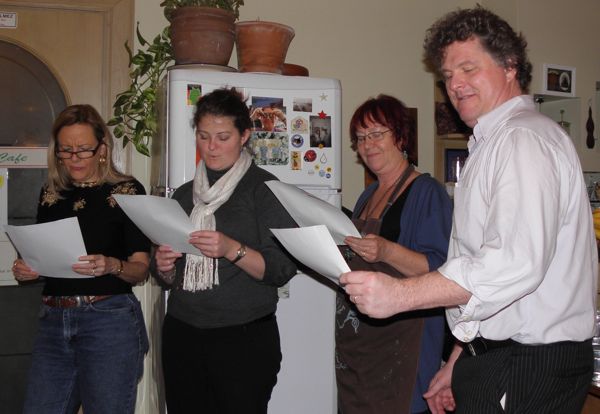
Duff involved his audience in a number of his readings, though there were a few Deep Male Voices cast to read in Deep Godlike Tones who didn’t follow directions. Typical teachers. They read the whiney little girl lines. Duh. It just added to the fun, actually.

The flunkees who read the girl's parts rather than GOD's partThe Deep-Voice Dudes.

Another group participation itemMore focused participants

There’s a deeper, more serious side to Duff’s poetry as well. He writes social commentary, love poems, international, historical, and intercultural pieces. How could he not, when his work takes him all over the globe?

Duff as a mobster—heater in hand

Well, maybe not ALL that serious…

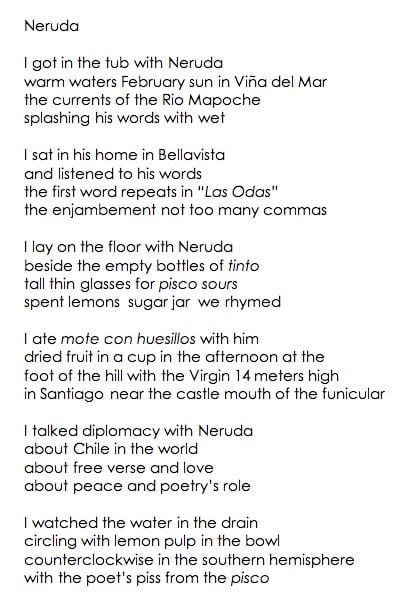
This piece was written during a sojourn in Chile, the home of Pablo Neruda, South America’s most famous poet (subject of the film Il Postino).Neruda

Even with a fairly serious poem, Duff can’t resist the piece de resistance—the tongue-in-cheek finish. It works.

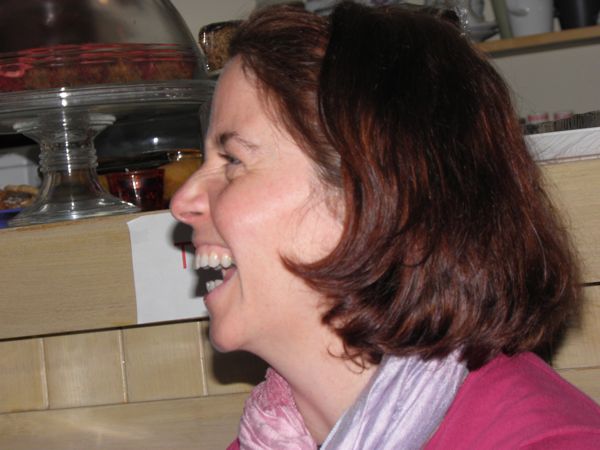
Marita, Duff's admiring spouse

Even his wife Marita continues to find Duff hilarious—because he is.

If you’re interested in getting a copy of Duff’s book, Right Brain, Left Brain (or is it Left Brain, Right Brain?—you see, it opens from both sides, one for each side of the brain), contact his publisher, Acorn Productions, at acornproductions1@myfairpoint.net.

Balmy Termal: New Year’s Weekend

New Year’s weekend. Back to Termal.

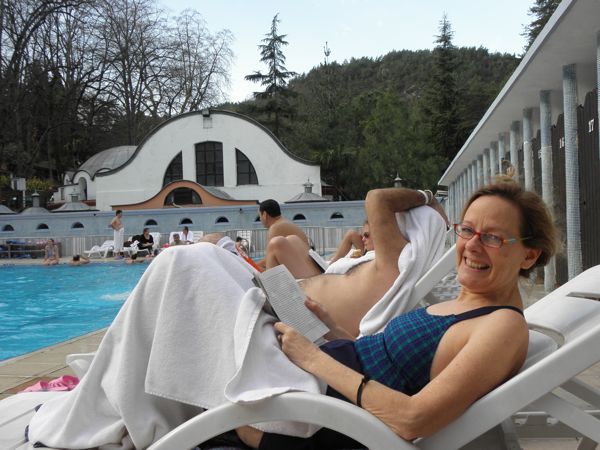
Though we had envisioned ourselves with snowflakes drifting onto our faces as we soaked in a thermally-heated pool, in reality we basked on chaise lounges in bathing suits, soaking up the warming rays of a January sun. Go figure. Who would have thought to pack shorts and a T-shirt? Oh, well.

Jenny at Hamam pool

Jenny relaxing by the Termal pool on New Year’s Day

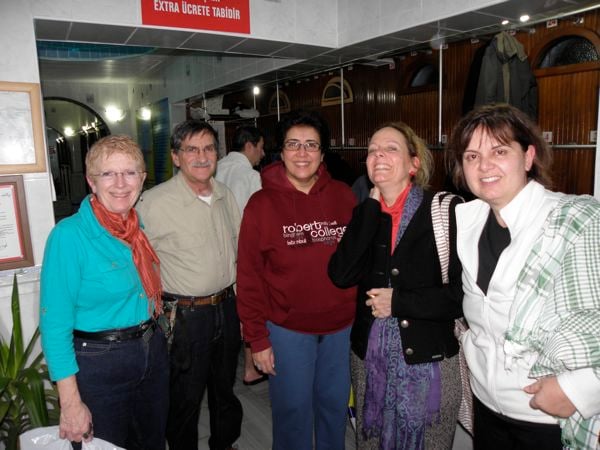
Luckily, we were an adaptable group: four Robert College teachers (Sandra, Jamilah, Jennifer, and me) and a delightful retired couple, Jolee and Mark (friends of Sandra—now friends of us all). We arrived at the Yenikapi Ferry early, so we sat outside sipping tea, then sahlep…

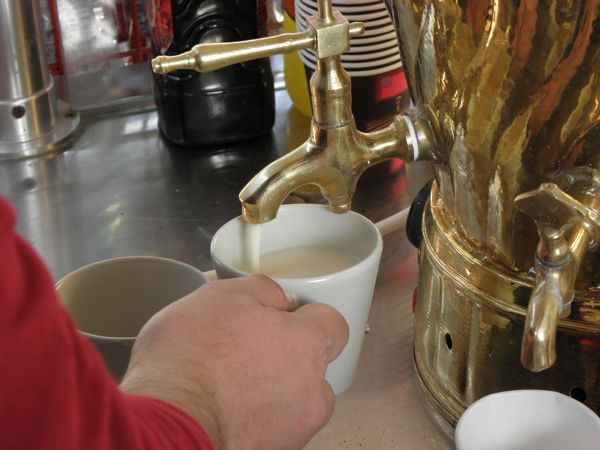
Ah, sahlep! It’s a drink made from the roots of an orchid plant called sahlep (fitting), and I love it.

Sahlep into the cup

Ah, sahlep!

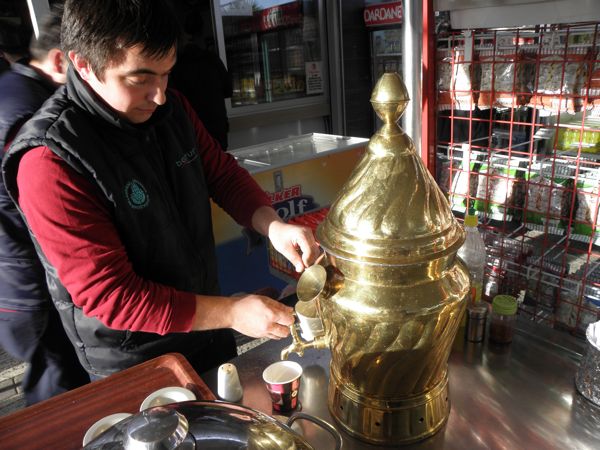
The tubers are boiled in milk, then dried and pulverized for future use. Mixed with milk and sugar, it’s a hot drink served all over Turkey in the winter months. Imagine a thick eggnog-like drink sprinkled with cinnamon, and you’re nearly there, except for its unique flavor. You’ll only find that in Turkey. It’s always served from a Dairy Queen-shaped bronze samovar; that’s how you know it’s sahlep.

Sahlep dude

The Sahlep Samovar

I’ve found powdered sahlep, which is OK, but not quite the delicious drink you get on the street. I  was thrilled to spot a sahlep stand near the Ferry’s tea garden. (Outdoor restaurants are getting big here in the winter months because Turkey now has anti-smoking laws. HOORAY!!!)

After a rocky ferry ride across the Marmara, we scored a service van that delivered us to our Termal mountain hotel, the  Çamlık. Once we checked in, we immediately headed for the hamam. (Well, actually after complimentary hors d’oeuvres and cocktails.) The hamam wasn’t too busy, being New Year’s Eve and all, so we indulged in the hot tub, the sauna, and a plunge into an icy  marble tub. Oh, my.

hamam bunch

Inside the hamam: Jolee, Mark, Jamilah, Jenny, and Sandra

Then came my favorite part of the weekend, our own little private cocktail hour on the balcony of one of our three rooms. It involved some jockeying of porch furniture, as the six plastic chairs gathered from our three balconies left no room for the plastic tables. Scrunched cozily in the rays of the full moon, we toasted the New Year with champagne, crackers, and German salami (a rare treat). Laughter was in good supply, too—a fitting way to ring in the new year.

Setting up for cocktail hour

Balcony Prep for Celebrations Ahead

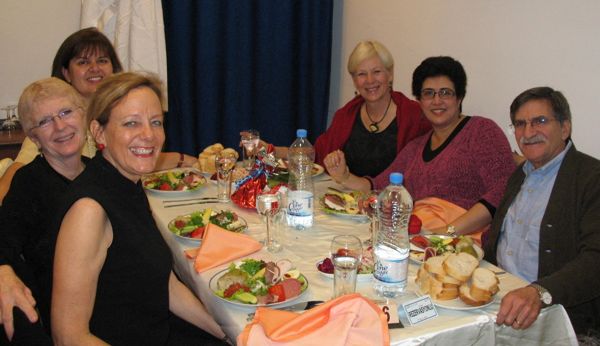
Dinner was quite a spread, though no culinary feat. We were pretty full already, so we didn’t mind a bit. Live music blasted through the huge dining room, which was opulently decorated for the event. Nonetheless, we all enjoyed ourselves.

IMG_2794

The New Year’s Eve gala meal

We worked our way through a meze plate, numerous hot mezes (which the waiters serve individually from trays), salads, then a lovely turkey dinner. My second of the season. In typical Turkish fashion, rice pilaf replaced the usual dressing. I was too full to care by that point. A few of us got up to dance, but to be honest, the music was so loud that we decided to succumb to the temptation of the outdoor pool under the full moon—a blue moon, no less.

It was not to be, though. Crews had completely drained the pool to refill it with clean water for the New Year’s Day crowd. BUMMER!!!! We went for a moonlight walk instead, then back to our balcony to toast the arrival of Twenty-Ten. Amazingly, we made it even beyond 12:00. Old farts, you know (at least a few of us).

Saturday we hit the hamams again after breakfast, luxuriating in deep-tissue soap massages. Oh, my! The little lady that worked on me dove right into my muscle knots and pressed them out of existence. $14 for a half-hour. Unbelievable.

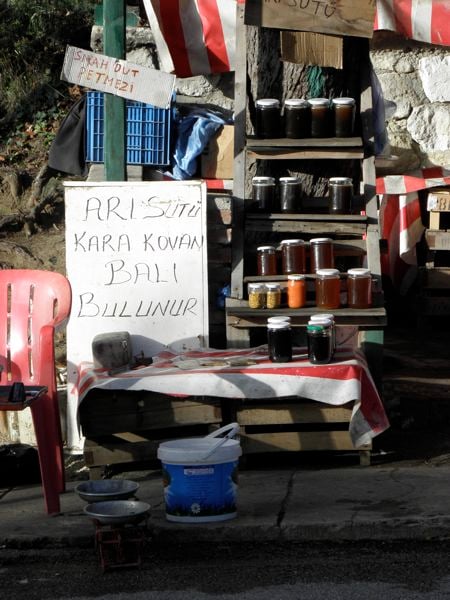
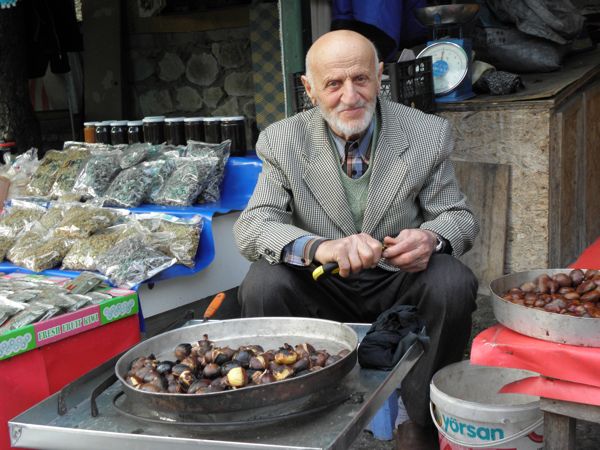
Jenny and I hit the pool for a while, then we all met to trek up the hill for lunch in a nearby village. Of course, we had to stop for a few minutes at the quaint street bazaar. It’s more than charming.

Bali-honey

Want some honey, Honey?

chestnut man

The local chestnut roaster gentleman

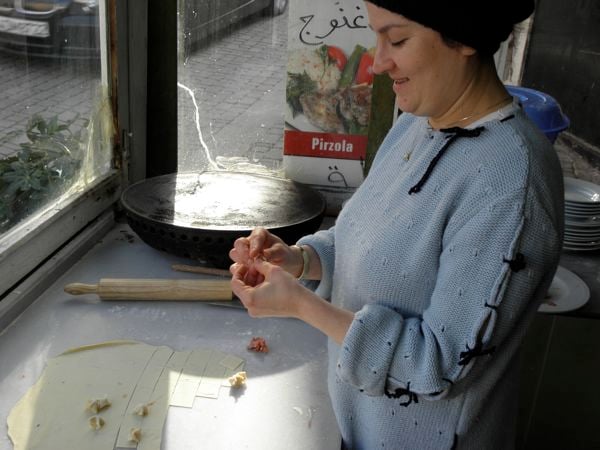
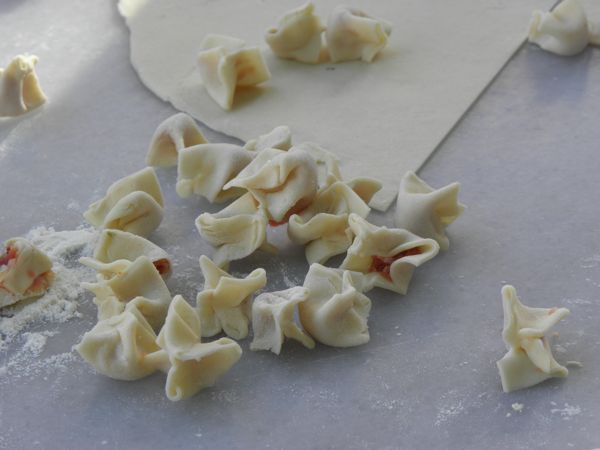
We had seen a woman making mantı the night before and decided to try that for lunch. Mantı is like a tiny ravioli made with a noodle-like pastry coating around tiny bits of either meat or cheese. It was fascinating to watch her make it, and it was equally delicious to eat. They smother it in a garlic/yogurt sauce with chili peppers sprinkled generously on top. YUM!!!

making manti

The Mantı Maker

little tiny manti

Mantı: scored pastry squares wrapped around tiny bits of meat

Some of us hiked the afternoon away, then sipped tea under the spreading branches of a 200-year-old plain tree (a cross between a maple and a eucalyptus, as far as I can tell). Lovely. Relaxing. Heavenly. (Poor Jamilah was stuck inside correcting exams. UGH!)

IMG_2815

Tea under the plain tree with you and me

The air was starting to chill by the time we headed up for yet another cocktail hour. This time Sandra pulled out a huge wedge of brie from Austria, another rarity here in Turkey. Dinner, then a walk down for a hot tub swim.

But—the pool was draining. ARAUGHHH!!!! FOILED AGAIN! You’d think they could wait until the 10:00 closing time, but no. Well, back to the Turkish bath—short, but warming.

Termal hamam

The Historical Tourist Hamam at Termal

Saturday we woke to rain, rain, rain. Sigh… The ferries were all cancelled due to a second day of high winds, so we hopped a bus around the Marmara, which took only an hour longer than the ferry. Whew. Things work out.

So, anyway—WELCOME TWENTY-TEN!

May it bring everyone good health, delicious food, and great times.

I’m ready, let me tell you.

Christmas in Istanbul?

Yes, it happened. Even here in Istanbul (and Hamburg) we managed. I feared that the Stuttgart Christmas Market might be the extent of my holiday, but then I took out a little Christmas Insurance: a plane ticket to Hamburg for a visit with my dear friend Jana the love of her life, Olaf. (They’re both crazy about trees.)

So how did Christmas happen? Well, in lots of ways.

PC240002

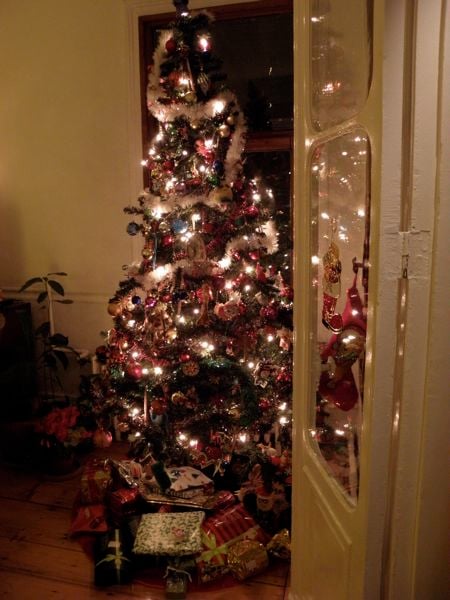
Melissa and Orhan’s Christmas tree

First off, some wonderful person (I’m not sure who) organized a Secret Santa program for willing teachers, and my Secret Santa has plied me daily with lovely treats of the season (and beyond). I’ve gotten coffee, chocolates, condiments, jams, jellies, and other splendiferous treats. It’s like having an Advent Calendar in my mailbox. I’ve enjoyed supplying my own “secret pal,” who happens to be one of my office mates. I started him off with a risky offering: a big container of home-made French Market Soup. An odd gift, I know, but he’s a bachelor. He raved about it.

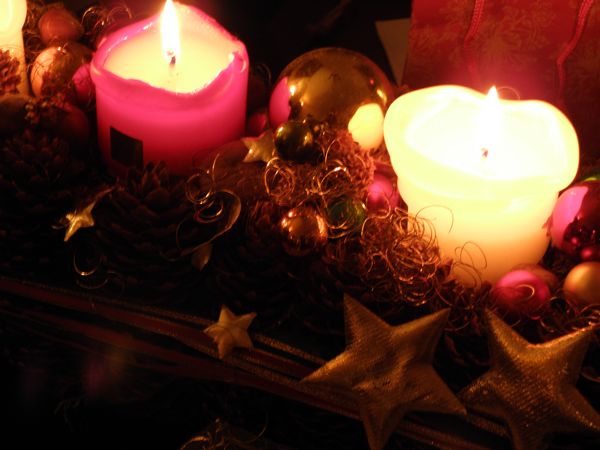
Our writing group met on Friday the 18th, and Jeff hosted us with a candle-lit buffet of mezes, cheeses, breads, and wines in his charming home, replete with antiques, artwork, Christmas lights and candles. A Christmas kick-off!

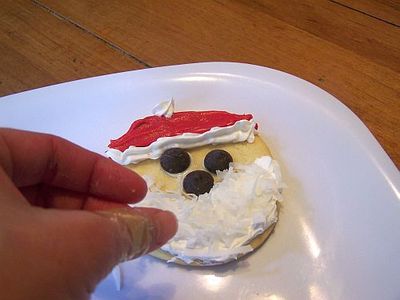
Then on Sunday Melissa asked me to help with a cookie decorating party for little people. When she set bowls around the table for the eight junior decorators, I was confused. I guess it’s just been too long since I’ve been around little people. I forgot that if you’re over eight, you take your time, carefully icing each cookie, often with contrasting colors, then you artfully apply sugar sprinkles to enhance your design. No need for a bowl, right?

how-to-decorate-christmas-cookies-5

Decorating, big-kid style (web photo from About.com)

But—what if you’re 3 or 4? You grab a cookie, slather (or glob) it with frosting, then shake on a mountain of sugar sprinkles, preferably in two or three shades. THAT’S where the bowl comes in. All the sprinkles that escape the cookie remain in the bowl for future use—more likely devouring than decorating. Great fun was had by all, even the grown-ups, who ended up bedecking the last few cookies as we sipped a glass of wine.

Our next Christmas event was Tuesday, planned by more Robert College Elves. It started with an outdoor bonfire, mulled wine and juices, and carriage rides with Santa, who called me by name as I meandered over to join the fun. (Ah, Duff! My Turkish class buddy.) After that we headed for a reception in Marble Hall while the children visited Santa and received gifts (supplied by their parents). Soon we headed downstairs for Christmas dinner in a transformed cafeteria—complete with soft lighting, centerpieces, and Christmas music. The turkey was delicious, although rice pilaf is a dismal substitute for bread stuffing. After dinner many of us joined Margaret at the piano upstairs to sing carol after carol after carol. Such enthusiasm! Yes, it WAS beginning to feel a lot like Christmas…

CHRISTMAS-CAROLS-NOTA__21726863_0-1

Christmas carolling a la Robert College (web photo from gittigidiyor.com)

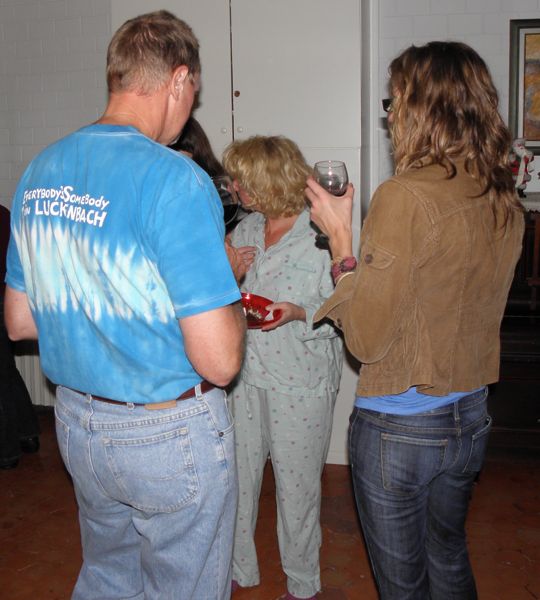
On Christmas Eve Melissa and Orhan hosted yet another gathering, an open house for teachers of Christmasses present and past. Dress was varied, from Santa caps to velvets to jeans—and Sally made the scene in her PJ’s. (Sally, by the way, is a grown-up).

PC240007

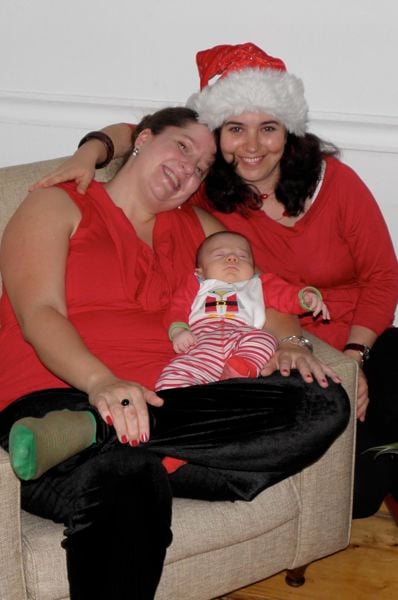
Karla, the baby who gave me my job this year, and Santa Mama Pelin

PC240006The pajama girl. Eager for Santa, don’t you wonder?

I left early to finish packing for my Christmas morning trek to Hamburg. Libby was thrilled when I pulled out her travel-case; she loves being included. Jana and Olaf met us at the airport with warm hugs, and I was just a bit disappointed to learn that Olaf doesn’t speak English. Turns out, though, that he’s absolutely wonderful.

PC250018

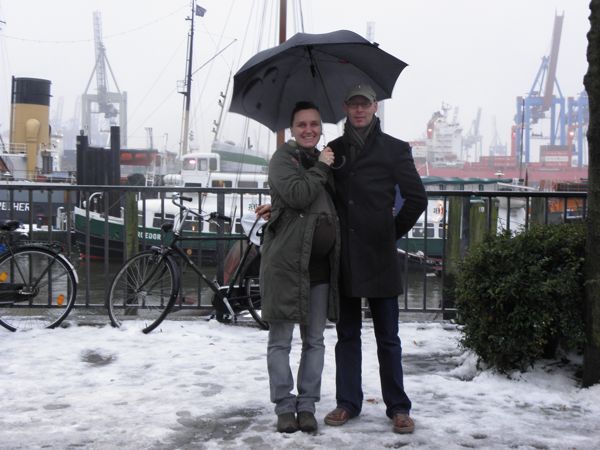
We sipped glugwein (tastes great in any language) and walked along the harbor in a Christmas drizzle, and there was still even a little snow on the ground. Icy  slush, anyway. After that we toured Hamburg by car and stopped for a Christmas lunch of—pizza. Well… it tasted great. It was about being together. That night, though, after opening gifts (mostly for Max, their soon-to-arrive baby), Jana prepared a traditional German Christmas dinner of Duck breast (YUM), red cabbage (sautéed in diced bacon), and dumplings. It was delicious. (FAR surpassing our pizza.)

PC250039

A little Christmas cheer…

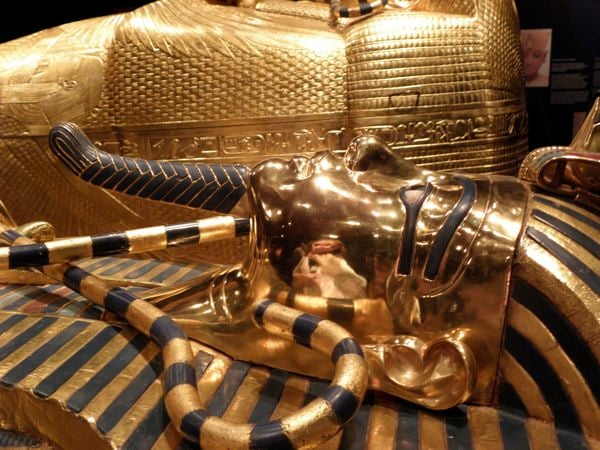
Lucky me, huh? The next day we lazed the morning away, took a long stroll through a nearby park, then headed off for the city for an exhibit of the treasures of Tutankhamun (the Egyptian king). Walking through with earphones in our own language, it was a shared multi-lingual experience. And—it was amazing. Though I’d seen many of these things in Cairo, the explanations were illuminating, putting things into clearer perspective for me. Also, since I’m over 50 (WELL over 50), things often seem new to me.

PC260064

Mr. Tutankhamun, may he rest in peace.

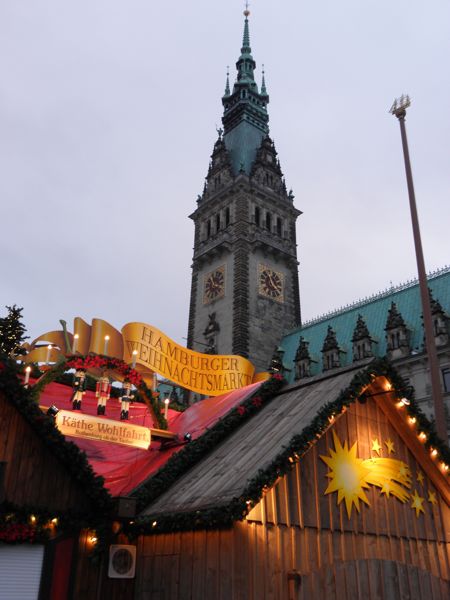
Afterwards we strolled through the Christmas market (more gluhwein), then finally settled to warm ourselves with a steaming cup of coffee in a nearby restaurant.

PC260089

The Hamburg Christmas Market

PC260078

Olaf, Jana, and a “hint” of Max

Sunday after breakfast Jana’s folks arrived from Berlin; I was tickled to see them again. We devoured Jana’s homemade soup, then headed together to Olaf’s home town where we hiked around the local castle and landed at his parents’ house, where the holiday family dinner was to happen. Unfortunately, I didn’t get to stay for goose, but I made up for it by throroughly pigging out on stollen and cookies. They generously packed me off with sausage, cheese, and even more stollen.

PC270107

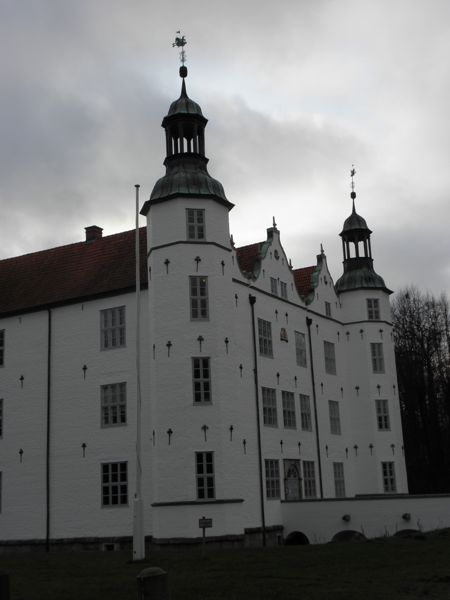
The little castle we visited…

PC270114

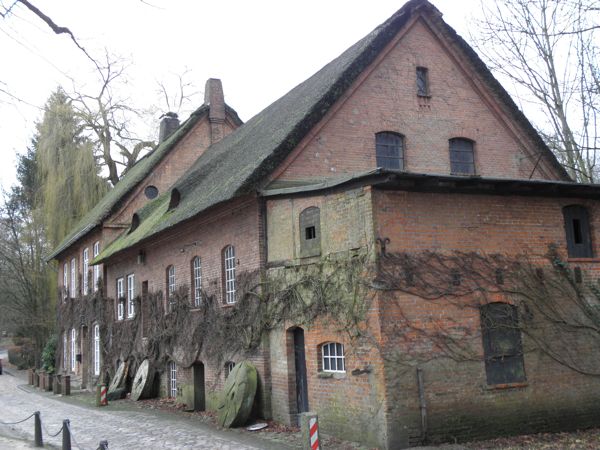
…and a nearby mill, with old millwheels leaning against it’s front

PC270128

Jana’s father checking the Christmas Goose.

It was a MERRY CHRISTMAS after all!

Turkish palate-pleasers

Food. One of the best things about Turkey. Really—it’s healthy, it’s fresh, and it’s delicious. Delectible. Scrumptious. Something to look forward to every single day.

So—for my friends (especially Karen), here’s the lowdown.

Kahvaltı (breakfast): a typical Turkish breakfast consists of black olives (think of calamatas), fresh sliced tomatoes, sliced cucumbers (that actually have flavor), beyaz peynir (cheese like a soft, moist feta or goat cheese), often an egg (usually hard-boiled), and limitless supplies of bread, honey and tart cherry jam. Other things we find on breakfast buffets are dried apricots and figs, succulent golden raisins, and sometimes nuts. If you’re really lucky, there’s clotted cream and fresh butter on the table—YUM!

Leslie diving into Turkish breakfast

Lovely Leslie dives into a Turkish breakfast

Ah, olives for breakfast!

Me diving into a Turkish breakfast

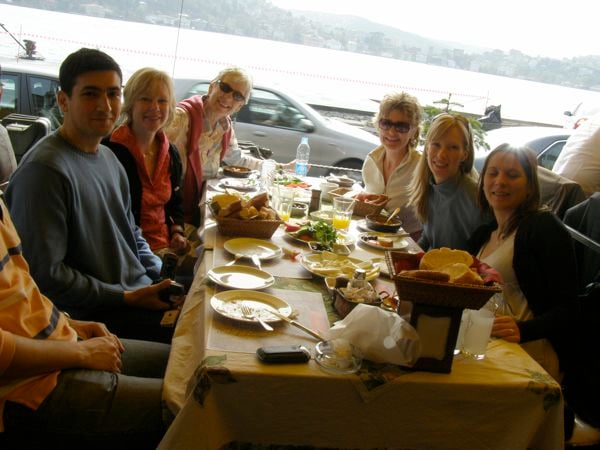
Turks enjoy going out for breakfast at restaurants along the Bosphorous, particularly near the Rumeli Castle. The breakfast takes hours, complete with all the above along with an egg dish called menemen: eggs, tomatoes, sausage, and peppers baked in a single-serving copper casserole dish. Lovely—and delicious.

P4120001

Breakfast on the Bosphorous with friends

Öğle yemeği (lunch): I often see people enjoying a simple meal of mercimek (lentil soup) and bread with water and tea.

P2150018

The typical mercimek soup, which comes in both green and red–depending on the lentils.

Many, though, choose to have a full meal at noon. That’s when I eat my main meal, as I have the great fortune of being offered a full Turkish noon meal at school, always with two main course offerings, soup, dessert, vegetables, and a full salad bar. Consequently, I’ve tasted nearly every possible Turkish dish.

Akşam yemeği (dinner) is pretty much the same as lunch here—some people have their big meal at night, and some prefer a light meal. Turks tend to eat later in the evening.

I’ll just mention some of my favorite Turkish dishes. Getting hungry?

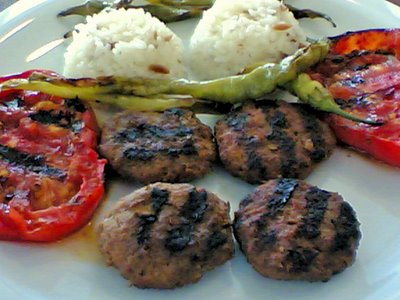
Köfte (Turkish meatballs). Made in all shapes and sizes (from ovals to long, thin “sticks”, köfte are usually grilled, and my favorites are the highly seasoned varieties.

akcaabat-kofte

Köfte—web photo from damak.net

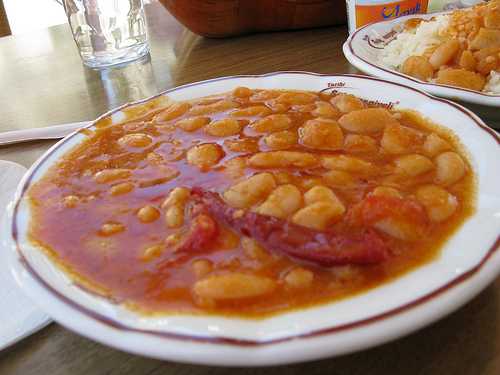
Fasuliye is a dish remotely like baked beans, but about ten times nicer. It is usually made of white beans a little larger than navy beans, and I don’t know what they put in the sauce, but they’ve got it down, let me tell you.

3052689255_37378aae13Fasuliye–web photo uploaded to Flikr by Julie Upmeyer

Döner is meat that has been spiced and stacked on a vertical spit, which turns and turns in front of a vertical burner. As it cooks, a chef slices it off to use in sandwiches and other special dishes. It’s usually made of lamb, but it can also be chicken. This is what the Greeks put in gyro sandwiches.

P1010016

This meat doesn’t look quite cooked to me, but…

Iskender is probably the most popular dish in Turkey, at least among my students. It’s a plate of chopped pide bread covered with a layer of lamb döner. This is drenched in a tasty tomato sauce and dolloped with yogurt. The crowning touch is melted butter drizzled over the entire plate. It’s served with sliced tomatoes and peppers. Oh, my! You haven’t LIVED until you’ve had Iskender. By the way, Iskender means “Alexander”, for Alexander the Great. Go figure.

P1010070_000000

The home of Iskender in Bursa, with friends Lisa and Dan.

Şış, known by Westerners as shish-kabob, is a typical Turkish meal, made with chicken, lamb, or beef. No pork here, though. Not in a Muslim country. Most restaurants have an open copper-hooded barbecue, with a separate grilling chef. They get mighty good at it.

PICT0017

Looks more like chicken wings than şış, but it’s grilled and GREAT!

Guveç is another of my favorites, an individual low casserole of some kind of meat baked with tomato sauce, spices, peppers, onions, and sometimes cheese. My favorites are shrimp and fish guveç. I’m bringing some guveç casserole dishes home with me. This is a dish I’d love to master.

P4090141

Ah–guveç!

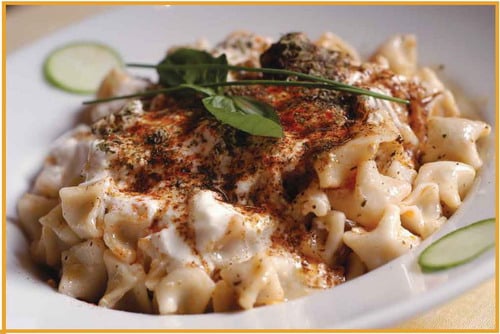
Mantı is another favorite here, sometimes described as Turkish ravioli. It’s tiny little ravioli, less than an half-inch in diameter, filled with meat or cheese and formed into little cubes. It’s served in a pasta bowl with a yogurt and garlic sauce. Tonight for dinner I had fried mantı swimming in yogurt garlic sauce with some hot tomato/chili sauce. Incredible.

mantimantı–web photo from www.mfertas.com (a personal blog)

Pide is a flat, bumpy yeast bread baked in a wood-fired oven, but it’s also Turkish pizza. It’s shaped like a torpedo with two pointed ends and a topping of cheese, meat, and/or vegetables is arranged in the middle. It arrives at your table piping hot and crisp, often cut into diagonal slices. It’s GREAT with mercimek soup and a glass of ayran.

P1010794

Our favorite pide restaurant in Cappadocia

PA290097

Hot, crispy pide

Ayran is a refreshing drink that tastes a little like buttermilk (they say). It’s blended yogurt, water, and salt. I love it.

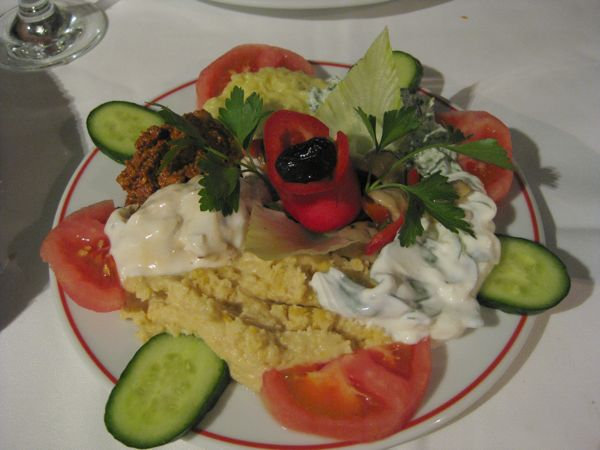
I haven’t said anything about mezes yet. Inexcusable. When you go out for dinner in Turkey, your first offering is a huge tray of mezes. These are hors d’oeuvres, Turkish style. There are small bowls of such things as cacik (cucumbers and garlic in thinned yogurt), olives, hummus, pickles, haydari (yogurt, garlic, and cheese with spices), cold fish, wrapped grape leaves, and my VERY favorite, grilled eggplant mashed with yogurt and garlic. Oh, my! There are hundreds of mezes, and it’s hard to choose what to have. Usually I’m pretty full by the time the mezes are over, and the main course goes barely tasted. I love them! I prefer when they bring one plate of mixed mezes for each person. No decisions required. There are also hot mezes—fried filo-wrapped cheese (cigara boreği) and fancy deep-fried meatballs…oh, the list goes on and on and on.

meze

A meze plate at the Hamdi Restaurant in Sultanahmet

P6290018

The meze plate at our end-of-year Koç School dinner.

I haven’t even mentioned fish, which Turkey is famous for. It’s a country surrounded on three sides by water, with a small sea within it. Fish can be expensive here, but it’s nearly always tasty. Although I love grilled fish, my two favorite dishes are balık köfte (fish formed into patties with herbs, then grilled) and balık guveç (a flat casserole of fish in a tomato and olive oil sauce with peppers, garlic, and onion). Oh, my mouth is watering!

P1010006

These fish may not look all that pretty–but they’re DELICIOUS cooked!

Gosh—and then the desserts. But I’m just too darn full! Maybe next time.

P1010061

When we’re full, the best dessert is always fruit.

You know what’s amazing? With all these fabulous foods, the Turks just don’t get fat. Their diet is based on vegetables and meat, and they walk a lot. Good plan!

Cuhaci Han

And a cup of tea to settle your stomach. Sigh…

Does it get better than this?

Gecekondu? What?

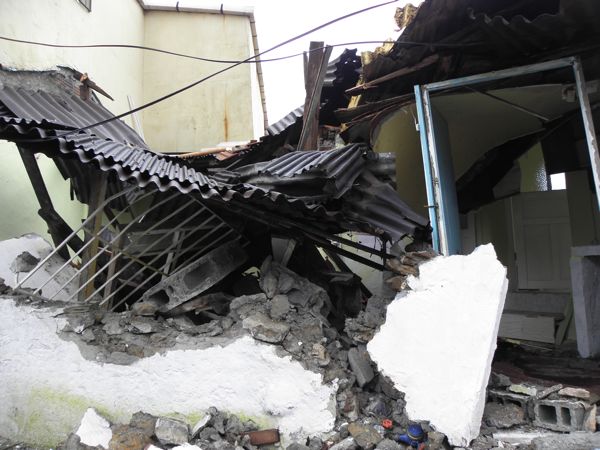
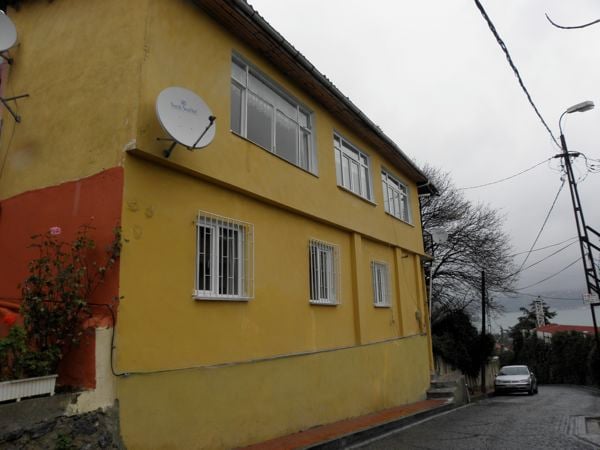
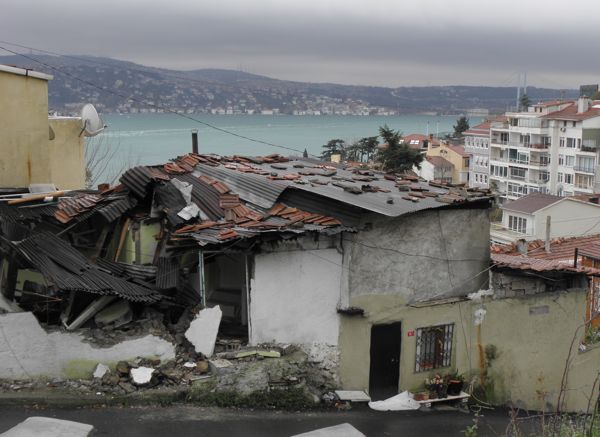
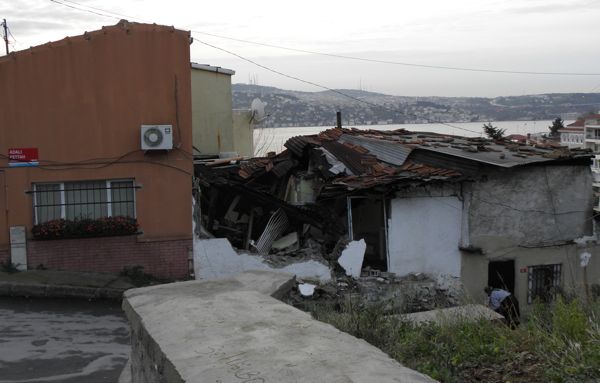
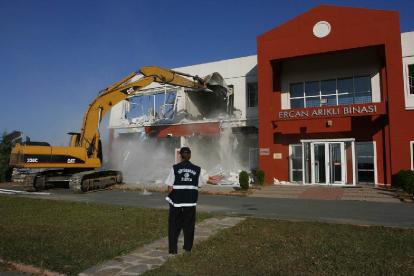
A home near my apartment was demolished last week, a disturbing situation at best. I asked an English-speaking neighbor about this shocking incident. “Oh, it was probably one of those illegal houses,” he said. “There are a lot of them, you know. You’re probably living in one.” Well, let me tell you, that information was none too comforting. (I later learned that my apartment building was, indeed, built illegally.)

PC120023

Last week this was someone’s home.

Though I don’t expect anyone will come and smash in my apartment this week, this event motivated me to do some research on Turkish property laws. I’ve heard lots of different things in the past. I was told that Turkey has squatter’s rights, which means that if you build a house overnight, you can legally live there even if it’s not on your property. I’ve also heard that you don’t have to pay taxes on apartment buildings if the top story isn’t completed, which explains why many Istanbul buildings have an unfinished top floor. They say that many old Ottoman houses are crumbling because no one claims ownership or the ownership is in dispute, and it’s illegal to destroy them until they collapse.

PC130002

My apartment building–in jeopardy?

Time to sort fact from fiction.

It’s all about history. In Ottoman times (1299-1923) all the land belonged to the state—the sultan. Ownership was a totally different concept then, which must affect the hazy property laws of modern Turkey. It’s sort of like the Native American theory that everything belongs to everyone, right? I think the Native Americans were clever to take mirrors and trinkets in exchange for land, since they were getting paid for something that belonged to everyone. With my students I use the example of air. When I offer them each one dollar for a square foot of the air in the classroom, they all take me up on it. Why? “Because you can’t own air,” they say. Well, in Turkey people built houses in any available space, using whatever materials were available to them. It worked.

PC120027

Another view of the demolished apartment…

DSCN0573

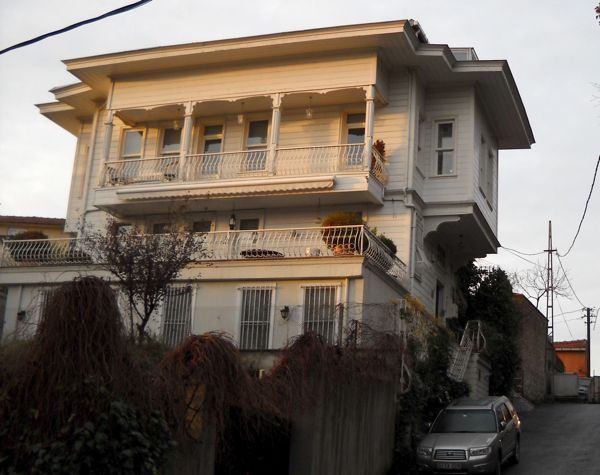
…and a lovely Ottoman home a few doors away.

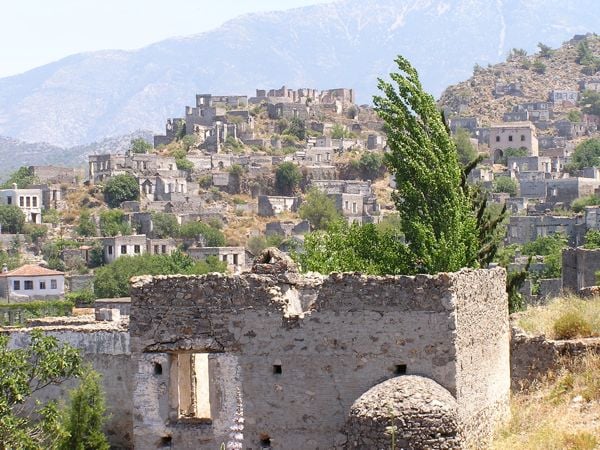
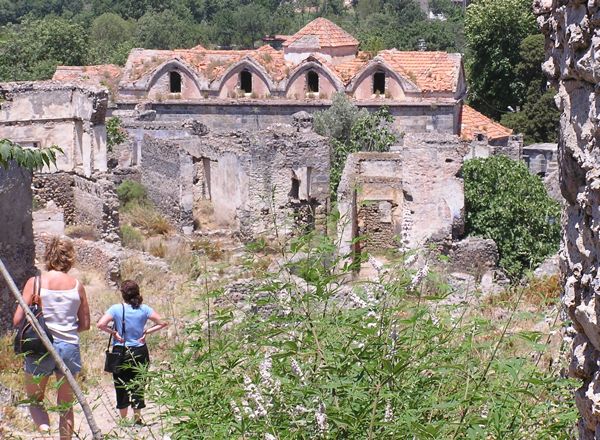
In 1923 when the Ottoman Empire ended, Ataturk founded the Turkish Republic and instituted numerous reforms, including a huge population exchange— mainly between Turkey and Greece. Turkish Christians were deported to Greece, and Greek Muslims were imported to Turkey by the hundreds of thousands. Just imagine all the vacated homes in both countries, all there for the taking. Unfortunately, many were left vacant. Kayaköy, a city frozen in time, is one of a number of completely deserted cities in Western Turkey near the Aegean. At any rate, the population exchange confused property ownership all the more.

P1010461

Kayaköy, a city abandoned after the population exchange.

P1010482Kayaköy’s crumbling cathedral (Susie and Shelley in the foreground–2007)

In recent decades there’s also been an exodus from rural Turkey to the cities, with many people moving into makeshift housing until they can establish themselves. Here’s where we begin to see “overnight constructions” called gecekondu (pronounced GEHjay-CONEdoo). In Turkish, “gece” means “night,” and “kondu” means “put.” According to a recent master’s thesis posted online entitled A study of the Gecekondu in Istanbul, Turkey (Miranda Iossifidis, 2008), these houses have been legalized:
The “Gecekondu law” was passed in 1966, and was necessary due to a legal loophole that enables constructions to remain intact if they are built after dusk and inhabited before dawn breaks, without the authorities noticing. This globally singular predicament means that legal proceedings take place, instead of the dwelling’s destruction. The law states the following in article 2:

“In this law, the term gecekondu refers to illicit constructions, that were built regardless the general regulations and directives determining construction work requirements, regardless the soils on which building is permitted or not, regardless the fact that land do not belong to the builder and that gecekondu are being built without the owner’s authorization.” (Turkish Law, Gecekondu Law No. 775)

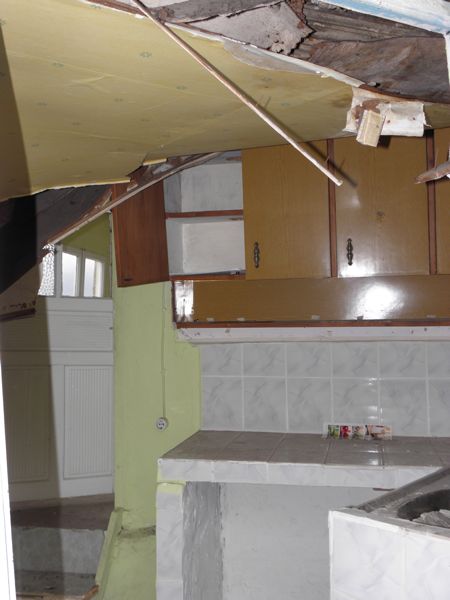
PC120022

Someone fixed dinner in this kitchen just weeks ago.

A few years ago my Turkish book group read a book of stories recounting the trials of people trying to establish a gecekondu community, Berji Kristin: Tales from the Garbage Hills, by Latife Tekin. A rather bizarre series of tales, it opened my eyes to the tribulations of these “shaky” communities.

So—after reviewing the history, what’s the reality here in little Arnavutköy, which I’ve grown to love?

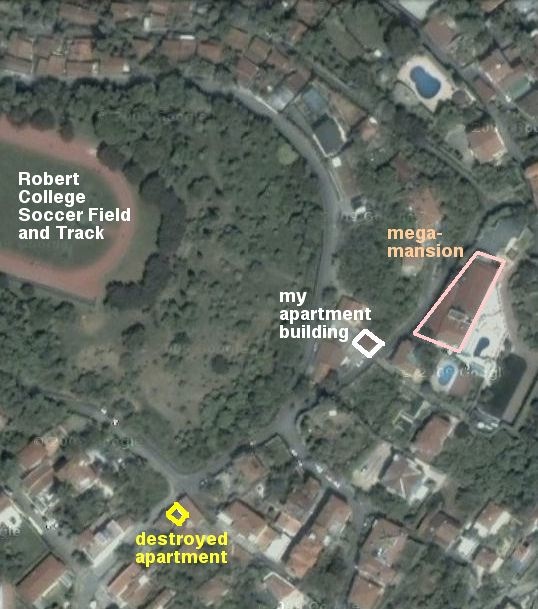
Well, the reality is that among and between all these incredible mansions (I’m surrounded by them) are many makeshift homes, mostly concrete-and-brick construction. Could they have been built in a night? I find that hard to believe, but who knows? Take a look at the Google map of my little neighborhood. My apartment building is about 50 feet across the front, so compare that to the mega-mansion across the street, complete with a pool and 8-foot fences all around it. The tiny little apartment up the street (maybe 20-25 feet square) is now rubble. Though it had a makeshift corrugated roof, its brick, stone, and concrete construction was typical of the area.

arnavutkoy

My Arnavutköy neighborhood. Most of the smaller roofs are gecekondu (upper left).

I talked to my neighbor Candan about it one morning on my way to school. As he dragged his big bulldog Pablo along, he explained that the land belongs to the Orthodox church, and that they probably ordered the demolition. “The little place next to it will be destroyed as well,” he said. “It’s a terrible time to do this, in the middle of winter, but these houses are illegal.” He continued to explain that although religious minorities are protected under the Treaty of Lausanne (1923), they are not allowed to build anything new in Turkey. He’s quite sure they can neither sell nor develop the property, so I don’t understand who benefits from this demolition.

PC100009

Yet another view–what’s the fate of the woman working outside the right-hand apartment?

In discussions with my peers I’ve learned that political ties (or the lack thereof) can mean the destruction of a home, a business, or a school. In fact, this fall a relatively new school in Istanbul, the Kemer School, was bulldozed two weeks before school started. Apparently the school was built illegally, which is the case with many schools and buildings.

municipality-demolished-private-school-2009-08-24_l

The Kemer School being demolished (photo from baktabulum.com.–see below)

For more information about this event, go to http://www.baktabulum.com/english-world-news/216947-municipality-demolishes-private-school.html. The Koç School (where I taught for 2 1/2 years) was built illegally, too, but they turned away the bulldozers and were allowed to stay open. I heard, too, that the head of the foundation that built the Kemer school also runs the Vatan Gazette, a newspaper often critical of the ruling AK party. Hmmm…

It makes one wonder—and worry.

A Stuttgart Sojourn

Stuttgart, Germany. Mercedes. Porsche. The Stuttgart Ballet. Yup. Not too shabby.

Why Stuttgart? Well, I was asked to chaperone the Robert College Debate Team for the European Debate Open Championship.

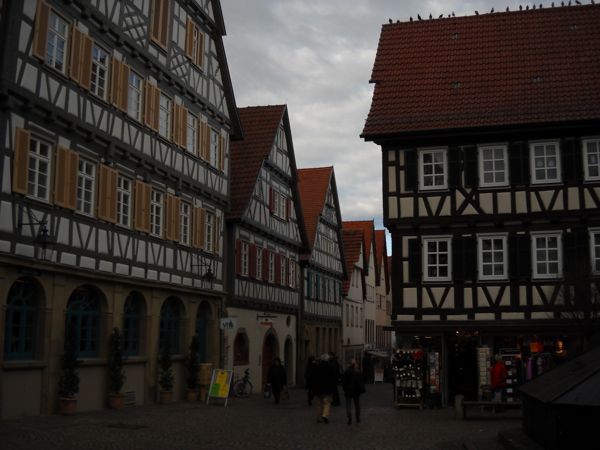
We were greeted at the airport by our hosts from Waiblingen (a Stuttgart suburb) and given train tickets good for the week. We hopped on the train to our respective “homes”—the students with host families, myself in a hotel. I found my way to the Romantica Central Hotel  in Winnenden (really!—but no romance) and checked into my shared room. The room, lovely as it was, had only one bed. Now I’m happy to share a room with a stranger, but a bed? Come on! Since they had no more rooms with two beds, I landed in a private room.

DSCN0538

Winnenden, my home for the week.

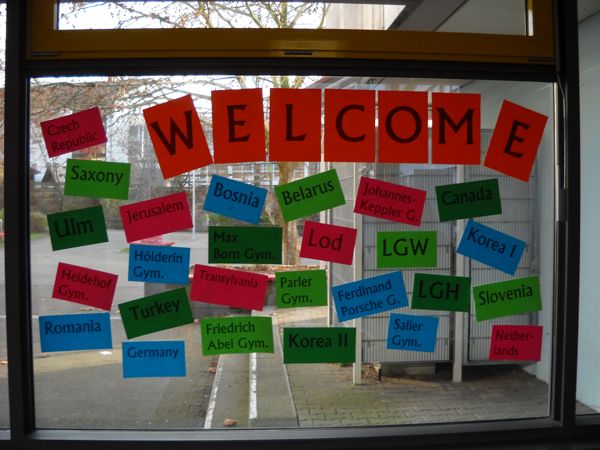
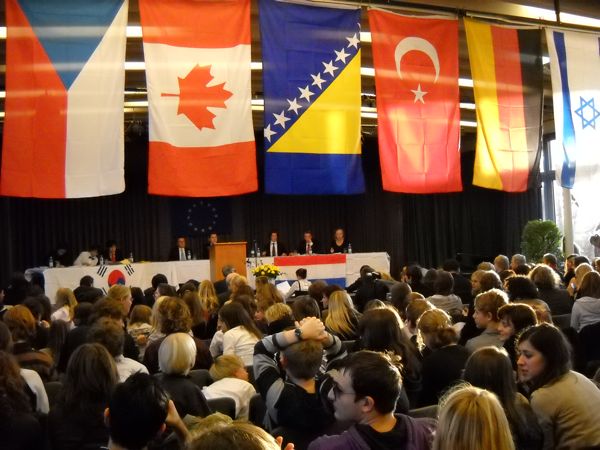
The hotel breakfasts were awesome (eggs, meat, cheese, fruit, cereal, bread, and all the milchkaffe I could drink), and I enjoyed getting to know the other coaches. Competitors for this event included teams from the Netherlands, Belarus, Slovenia, Israel, Korea, Romania, Canada, The Czech Republic, numerous German communities, and, of course, Turkey.  Each day there were morning activities followed by a lunch and two afternoon debates. We were on our own for the evenings, which many students devoted to preparing the next day’s debates.

DSCN0501

A Welcome Window at one of the host stchools

The first morning we were treated to a wet walking tour of the city center. Only half of us had umbrellas, so the day’s drizzle dampened more than our spirits. Near the end of the tour, we peeled off to imbibe in Christmas Market crepes and brats.

The highlight of my rainy morning was finding the State Theater, home of the Stuttgart Ballet. After inquiring at the box office, I was approached by a young Slovenian debater/dancer who asked if I planned to see a ballet. We were both eager to attend the Tuesday performance. Because of late debates, we wouldn’t make the 7:00 curtain, but we’d be thrilled even to see the second half of a ballet.

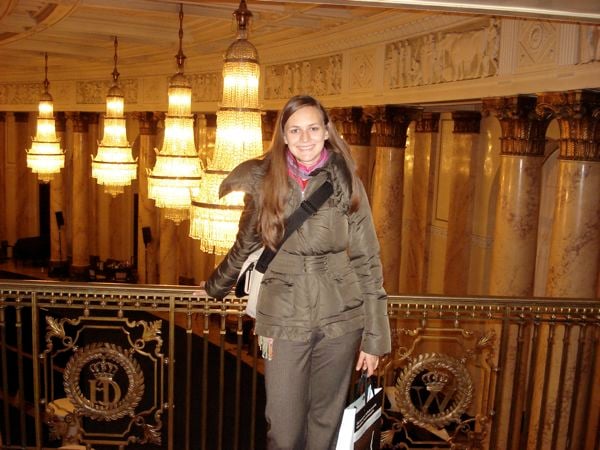
After Tuesday’s final debates, we raced off to the S-bahn train to Stuttgart. Spirits soaring, we found our way to the theater, then waited impatiently for intermission. Ziva purchased a book, I donated to World Aids Day, and we gawked at the sumptuous décor of the lobby’s marble columns, plush carpeting, classical friezes, and dazzling chandeliers. Cocktail tables were set with hors d’oeuvres and champagne for the intermission.

Ziva The lovely Slovenian ballet dancer, Ziva, in the lobby of the Stuttgart State Theater

Once we checked our coats, though, reality set in. They examined our tickets and immediately directed us upstairs to the next level, considerably less extravagant. When we showed our tickets to that coat check, we were dispached up yet another flight of stairs (uncarpeted), to a rather barren lobby. Class systems exist everywhere, I guess. It reminded me of the London theaters, where low-priced seatholders use a side entrance.

We swallowed our pride and waited for the endless pre-intermission applause to abate.

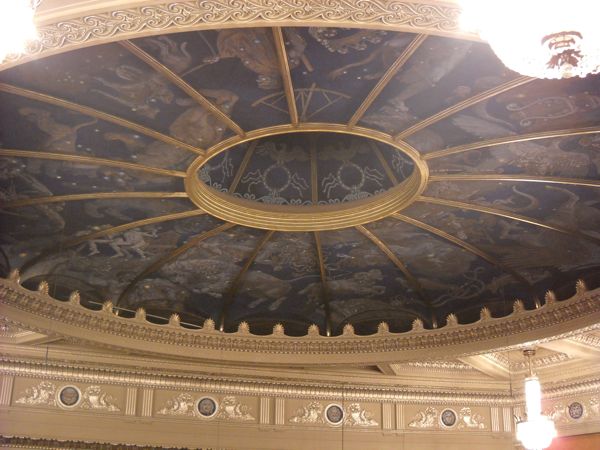
When we finally got in, we were once again met with lavish décor: more chandeliers, tastefully classical trim, and a stunning recessed ceiling painted with mythological figures in a night sky (which we could almost touch from our $30 nosebleed seats).

DSCN0445

The theater’s constellation ceiling painting

Once the lights went down, though, the magic began: dance to a choral requiem by Gabriel Fauré. Black-robed singers filled the orchestra pit, with a small orchestra beside them. The curtains opened to reveal a stark white stage with an assembly of dancers in variously decorated white leotards as they shuffled onstage in a mass, swaying their torsos and arms in repetitive sweeps to the music. Soon they divided to mesmerize us with stunning ensemble and solo dances, a marriage of ballet and modern dance. What can I say? Never in my life have I experienced a more spellbinding dance performance, and who would have thought vocal music and dance could blend so beautifully? We were impressed far beyond our expectations. The performance was over too soon, and Ziva and I had to pinch ourselves. “We’ve seen the STUTTGART BALLET!”

The act ended to thunderous applause. Dancers and soloists took bow after bow. Fortunately, they had choreographed numerous bowing sequences, each of which must have been repeated three or four times. I think the applause lasted nearly ten minutes. Understandably.

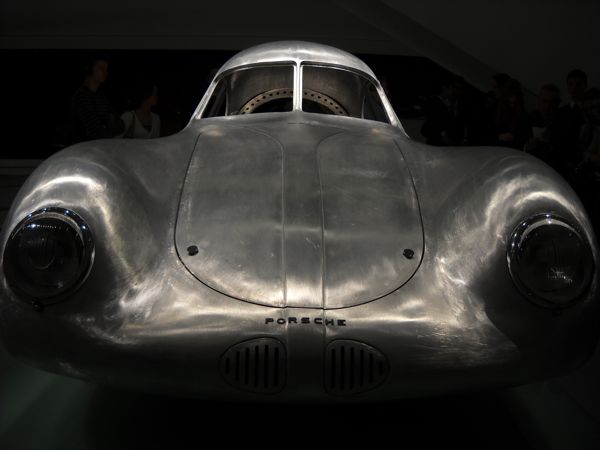
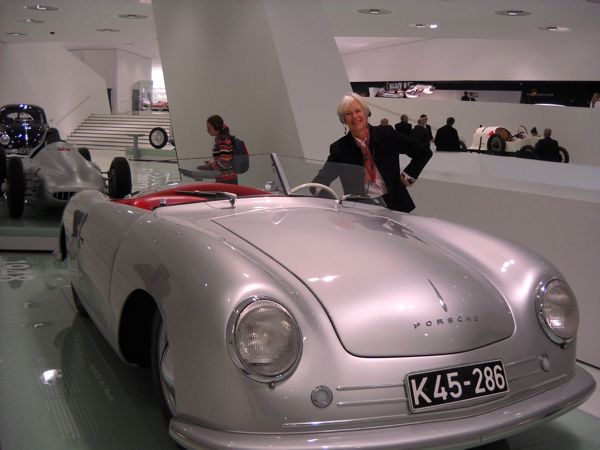
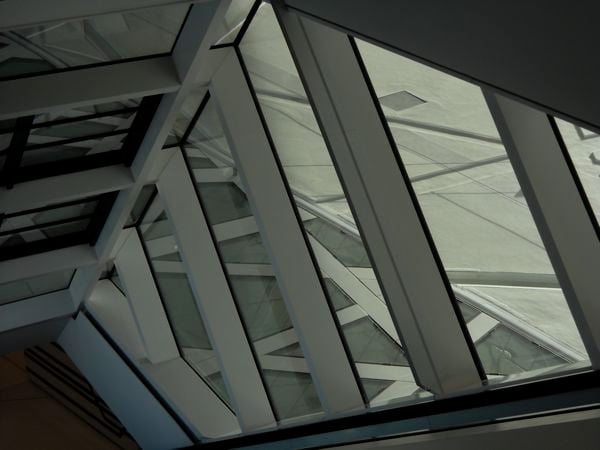
The week continued to improve. The next morning we enjoyed a tour of the sparkling new Porsche museum; I’m not sure whether I was more struck by the displays or the architecture, but both were impressive.

DSCN0452

An early sportscar design

DSCN0461

Couldn’t resist.

DSCN0489The view from the 3-story escalator looking out over a roof.

After that we stormed a city bus to the afternoon’s venue for the afternoon debates. That afternoon’s prepared topic was “There is no rush to applaud Obama.” Interesting that the world is so focused on our American president. My students paced the school courtyard as they planned and practiced their points. (Unfortunately, they lost.)

Dedicated debaters pacing the school courtyard as they rehearsed their presentations.

That was the last of four days of preliminary debates, and the Turkey team had won five of eight. Two of their losses had been split decisions, so they hoped to make the quarter-finals. We wouldn’t hear until Thursday afternoon. ARAUGHH!!! I told them not to expect it, but to be prepared.
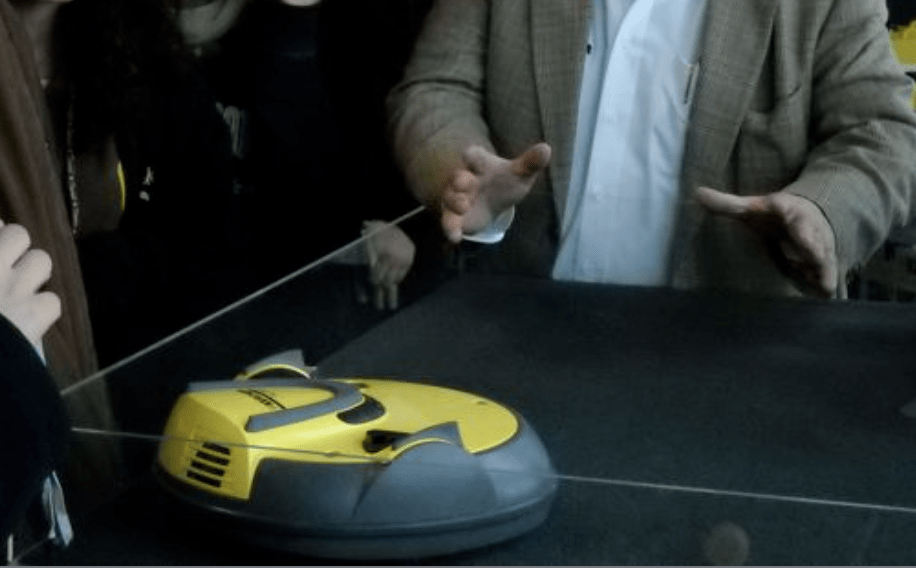
Our morning was spent touring Karcher, a world-wide cleaning equipment manufacturer. Though we expected to be bored, it was fascinating, and they treated us like VIP’s. Karcher recently cleaned Mount Rushmore—for free. Amazing. They sent us off with a new cap, a professional photo of the group, and a belly filled with butter pretzels and a delicious lunch.

A demo of Robby, the small robotic vacuum cleaner. Cost: $1500

Then came the big announcement. Turkey came in 7th place, which gave them a spot in the quarter-finals. HOORAY!!! For their second debate contest ever, this was an exciting moment. Last year Robert College attended only one tournament where they won only one debate—and this year the quarter-finals!
They had an hour to prepare, and their topic was “This House Believes that David Beckham and Tiger Woods are more relevant than Shakesperare.” Now that’s a tough one. Unfortunately, they were out-classed by a Shakespeare-quoting team from Korea, but they handled it graciously. The kids have gotten to know each other over the week, so they were genuinely congratulatory to the winners.

DSCN0557

The final debate–Korea vs. the Netherlands

Friday was the final debate, where two teams debated before an audience of hundreds. Their topic was “This house would tear down walls.” A vague topic, artfully won by the Korean team on a split decision (4-3) over the Netherlands.

World class debating.

After an eventful week in Stuttgart, four of our team members qualified for the Turkish National Team and will compete in the World Debate Championships in Qatar this February. (No hard feelings…Mehmet didn’t try out.)

These kids are World Class!

Meandering Malta

Me and the Brits are here enjoying the off-season in Malta. Why it’s off-season I don’t know. The weather is lovely—long-sleeved shirts, but sunshine prevails. It’s my first solo vacation (probably my last), and my plan was to get lots of writing done on my teaching in Turkey memoir. Well, I’ve done some writing, but not as much as I’d hoped. Why? Well, this country is just too darned fascinating.

PB250109

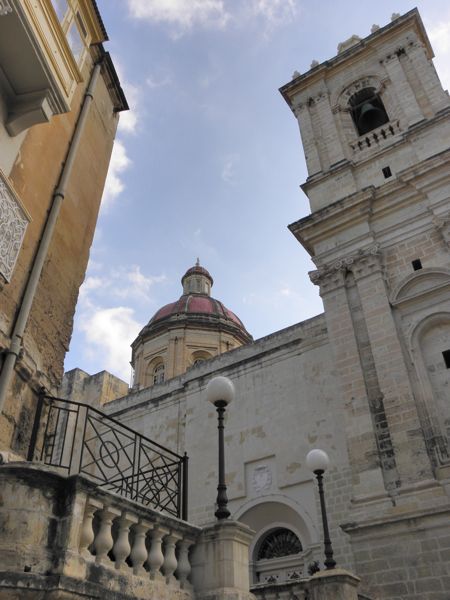
A typical street/sky scene in historical Malta.

I arrived Saturday mid-afternoon and headed down to Avis to claim my vehicle. Little did I know that as a former British Commonwealth nation, Malta follows the British system of roundabouts and driving on the left side of the road. ARAUGHHH!!!! It took me a while to get the hang of it, but I did OK—until I couldn’t find my hotel. I was poking around some back streets when I heard a MAJOR crunch on the passenger side of my car. Shaking, I parked just ahead to check the damage. The other car was fine, but mine had a black scrape down the entire side of the car from their side mirror. Oh, my GOD! Fortunately, I’d sprung for the insurance. I stepped into a nearby hotel for directions, only to learn that Club Riza was just around the corner. I inched my little Huyundai around the block and parked it—gingerly.

I’m staying in a little studio apartment that’s actually very sweet. It has a Murphy bed, so it feels like a living room as soon as I tuck the bed away into the wall.

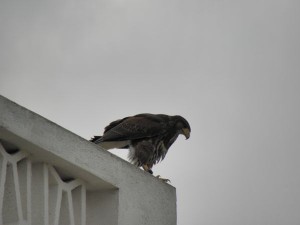
I headed out for a walk to calm my nerves, and I came across a falconer training a very stubborn falcon. It was fun to watch, and I couldn’t help but think of the Maltese Falcon by Dashiell Hammett. Apparently when the island was ceded to the Knights of Malta, the Spanish emperor required the payment of a single Maltese falcon each year in rent. It’s said that Malta’s peregrine falcons were known as the world’s finest. Interesting.

PB210037

The errant Maltese falcon…

PB210039

and its frustrated falconer

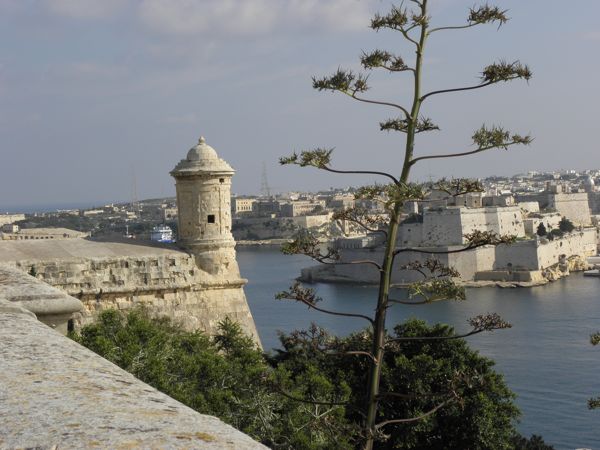
I’ve enjoyed discovering the history of this 17-mile long mid-Mediterranean island. It’s 60 miles south of Sicily, a strategic outpost for whoever happened to control it at any given time (Greeks, Romans, Arabs, French, Brits, Italians…). The island has been under seige for much of its history, so the shoreline is dominated by either cliffs or fortresses, both of which are awe-inspiring. The Knights St. John moved to Malta from Rhodes in 1530 after that island was overtaken by the Ottomans. Later known as the Knights of Malta, they defended their island country from attack for many years.
PB220056The fortresses along the harbor in Valetta
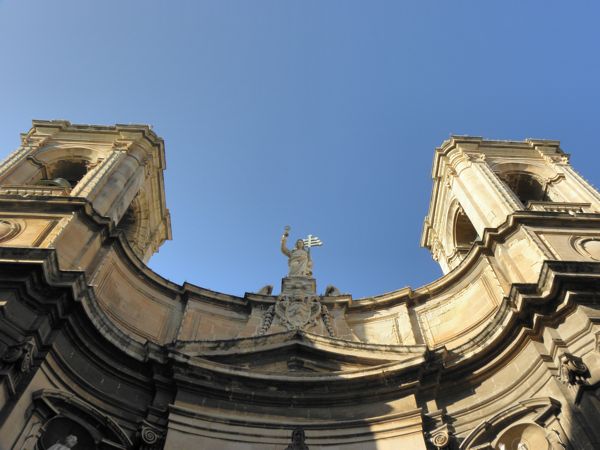
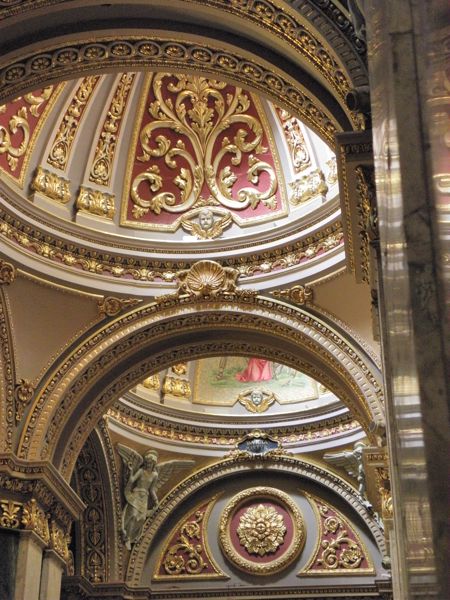
As a Roman Catholic country, Malta boasts countless breathtaking cathedrals and basilicas (what’s the difference, by the way?), especially when its population doesn’t even reach 400,000. Ask me how many church photos I have. (A lot.)

PB220144

A church facade in Valetta, Malta

PB240175

The interior of St. George’s Basilica in Victoria, Gozo.

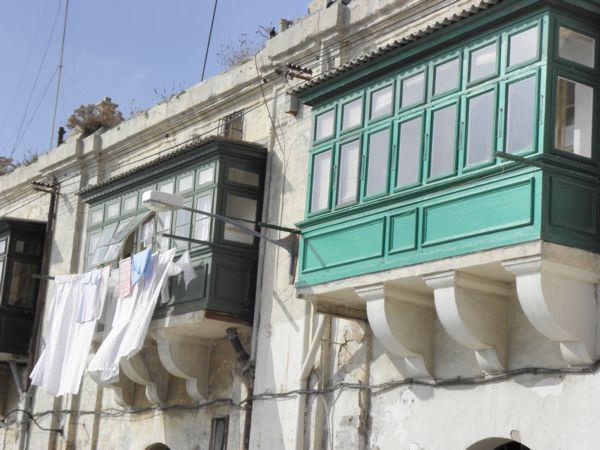
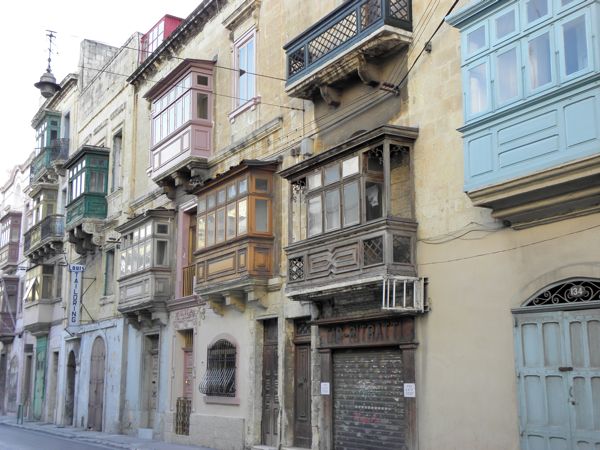
Beyond that, Malta has a few unique architectural features that fascinated me. I immediately noticed their wooden balconies, probably because they resemble those of Turkish Ottoman houses. Not surprisingly, both come from the same Arabic influence, originally intended to allow the harem (women) to see what was going on in the street without being seen uncovered. One guide told us that they didn’t originally have windows, and that the women watched the street through little peepholes in the floor.  In Malta these balconies are historically protected, with government funding for upkeep and renovation. Most of them are dark green, though some are other colors.

PB230066

Typical balconies in Malta old towns–these in Valetta.

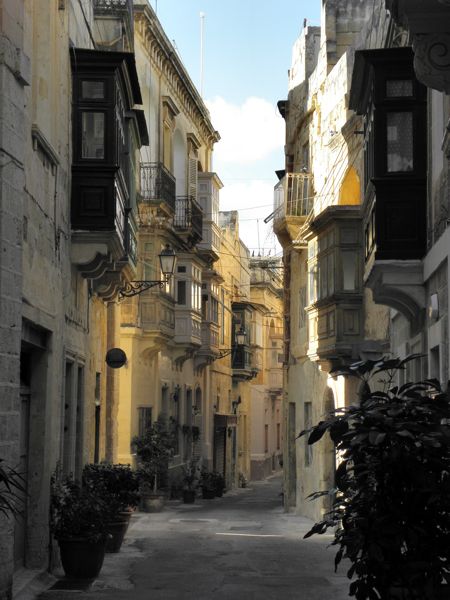
PB250082

A street scene in Vittoriosa, MaltaPB250243

A mix of balconies in Senglea, Malta

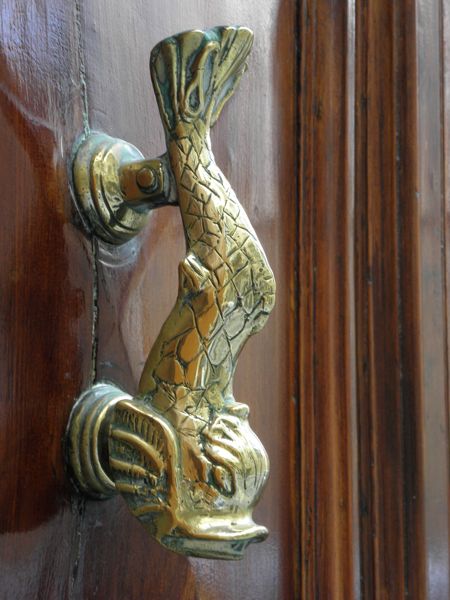
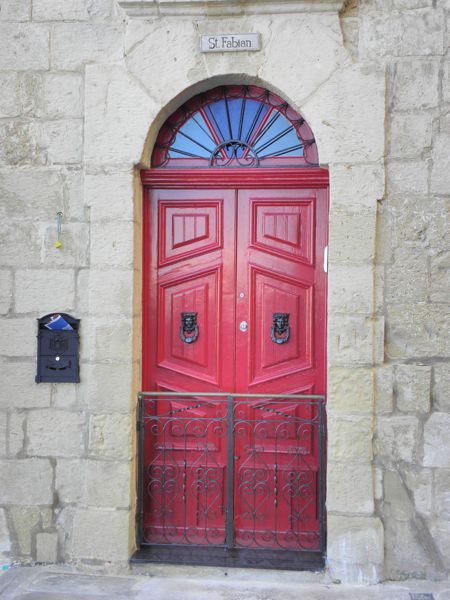
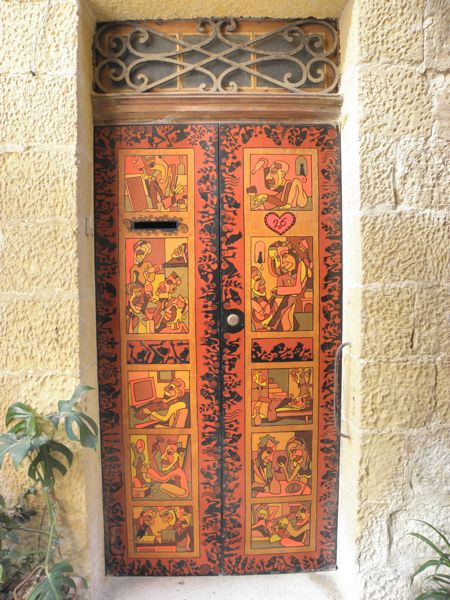
I’ve also enjoyed the doors. Because most of the buildings are made of limestone (Malta is mainly limestone), doors are the only colorful features on many of the homes. Some have beautiful door-knockers, often golden fish. This is new to me, and striking (pardon the pun).

PB220139

A Valetta door knocker

PB250054

a brilliant door in the back streets of Vittoriosa

PB250090

A Vittoriosa wine bar–closed for the afternoon. Sigh…

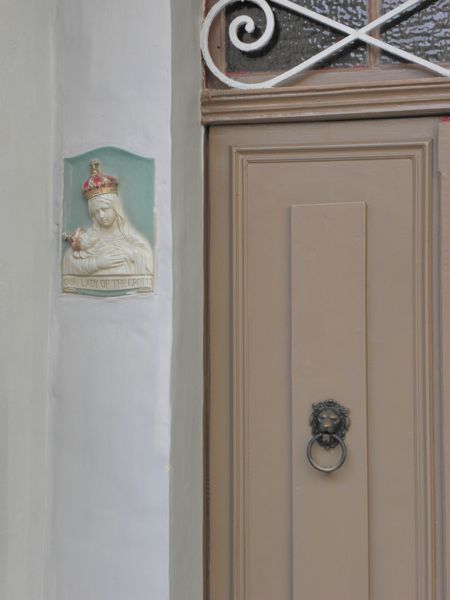
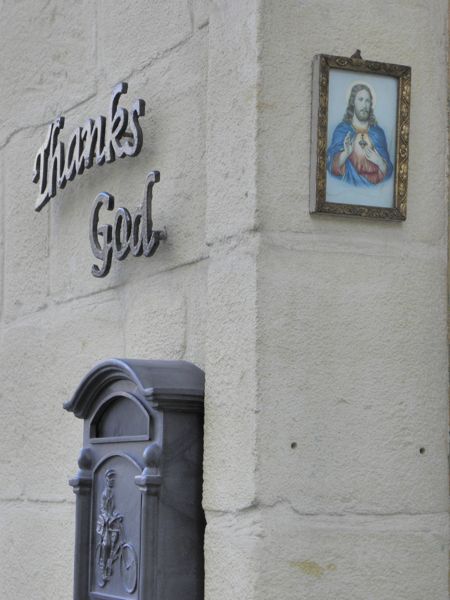
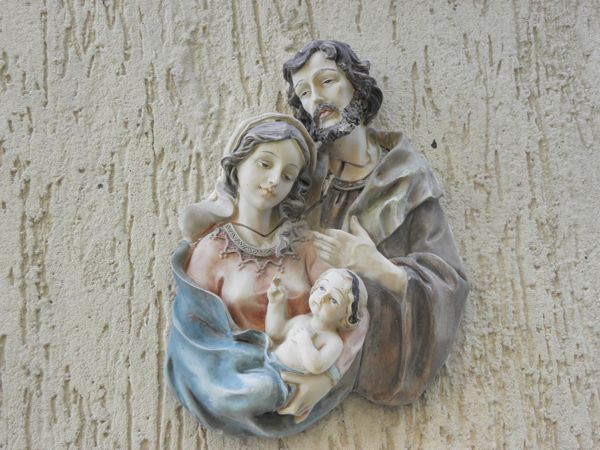
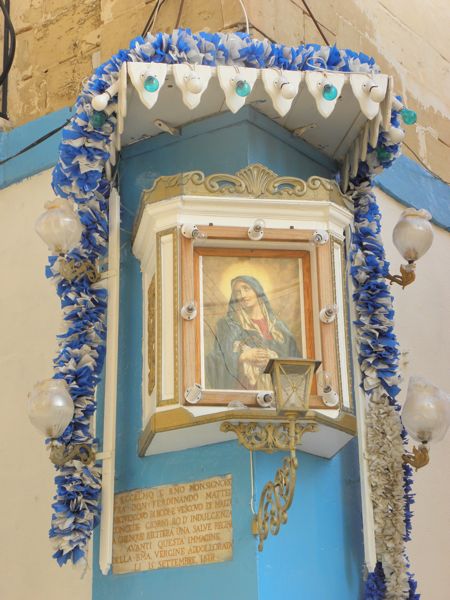
It’s also common to see a religious icon next to a door—a frieze, sculpture, or painting, often of the Virgin Mary or Saint Lawrence.

PB230196

“Our Lady of the Grotto”

PB250105

a clear message to all who enter

PB250221

I think this doorside miniature is porcelain—Vittorioso, Malta.

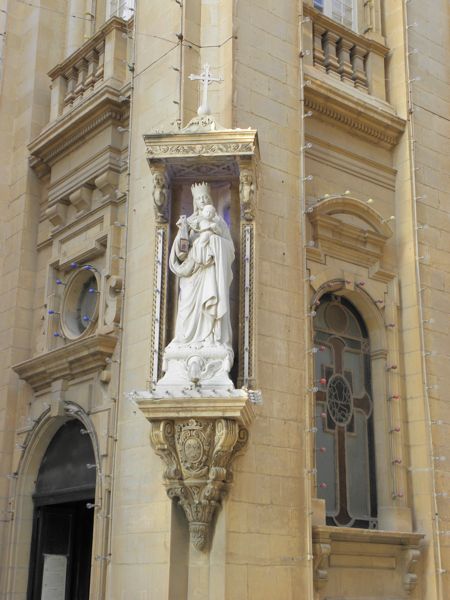
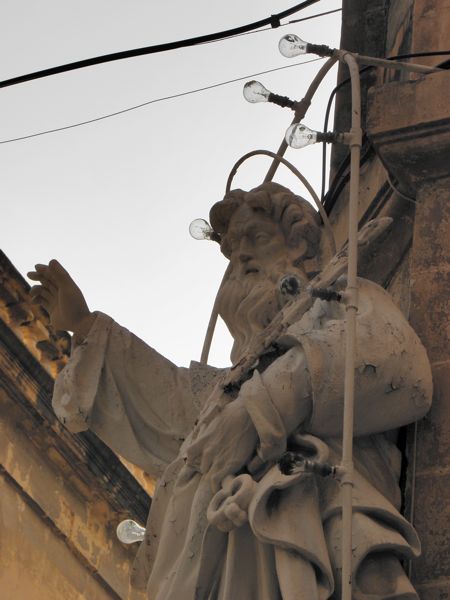
Statues of saints also grace the cornerstones of many of Malta’s buildings. The deep faith of the Maltese is evident in nearly every neighborhood.

PB220212

These icons appear on corners of churches and other buildings.

PB220211

The light bulbs add a nice touch…

PB250231

…and it gets even worse.

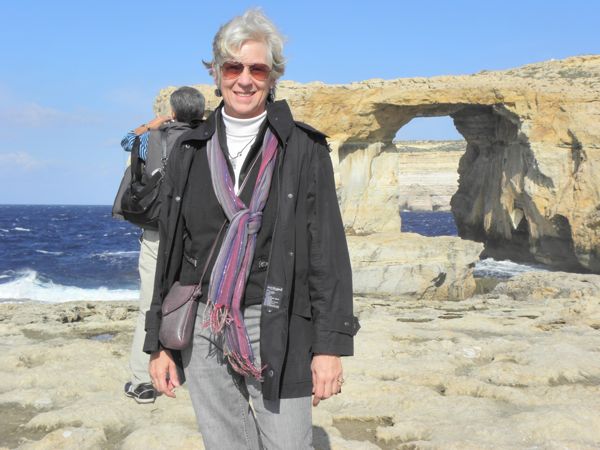
On my trip to Gozo (a small island north of Malta’s main island), I enjoyed exploring some of the island’s physical features, including an inland sea and the stunning Azur Window, a stone archway to the sea.

PB240073

Me at the Azur Window on Goza

Another solo traveler and I hiked up a bluff overlooking the sea above a little fishing village where we’d had lunch. Speaking of lunch—the food here has been a disappointment. Because they cater to British tourists, and perhaps because of their British heritage, my meals have consisted of fairly tasteless meat and overcooked veggies. Oh—except for a wonderful salad plate of thinly-sliced smoked salmon, tuna, and cod. There’s always hope.

PB240108

Heading up the bluff after lunch

The people here have been kind and welcoming, but in spite of that I’ve been a bit lonesome. On my first day I drove into Valetta to tour on my own, and two very kind older men chatted with me for a while, but that was it. The next day I took a bus tour of the northern half of the island and joined a young couple for lunch, which was nice, but I was the “odd woman out” with all the couples. Sigh…
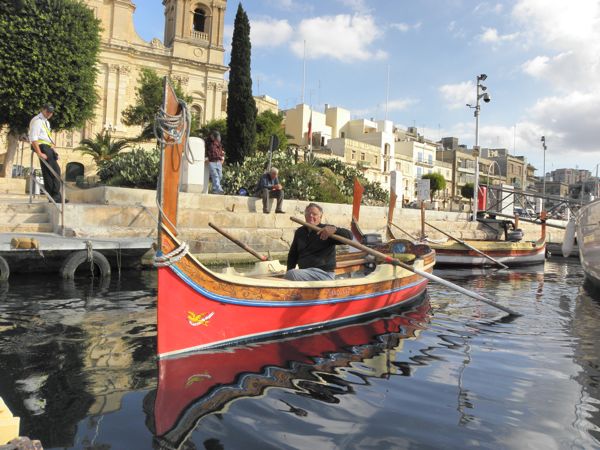
On the Gozo tour I palled around with another single traveler, a young Polish woman working in London. Natalia and I are both avid photographers, so our pace was compatible. I picked her up the next day to explore the three ancient cities of Malta . After lunch we hopped on a little Malta boat with Captain Joey for a tour of the harbor, then hiked back to my car from the other side. It was nice to share the adventure, nice to finally find a friend.
PB250116

The harbor cruise ‘vessel’

PB250199

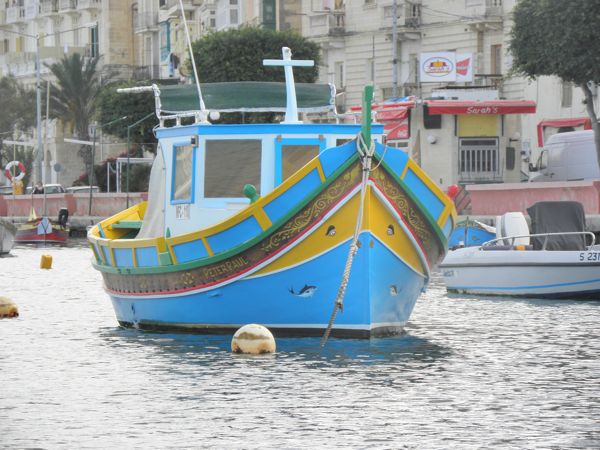
…and a typical Malta fishing boat.

PB250191

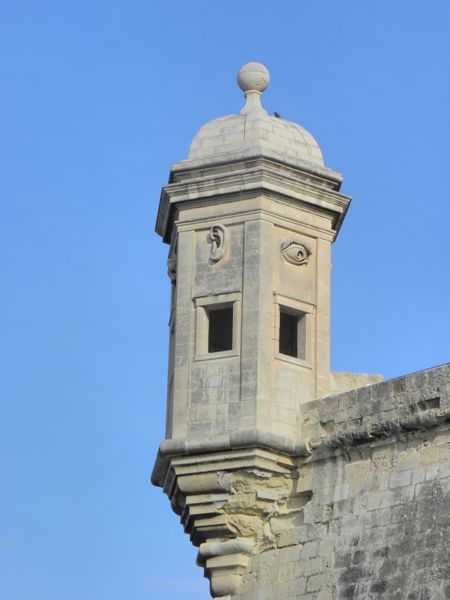
All eyes and ears on the Grand Harbor, Malta.

I’m not sure I’d choose to vacation alone again, though—I think I’m just too darned social.

But Malta? It’s lovely. If you like sunshine and history, I highly recommend it. Even in November. I’d probably forego the car rental, though.

Oh—good news. The black scrape dissolved right off the side of the car with a little solvent. WHEW! There’s a bit of a dent in the door, but nothing like it seemed …

Arnavutköy’s Newly-Cobbled Streets

The new cobblestone road has found its way to my door, at last! The Cobbling Crusaders have finished work here and moved on up around the corner. These guys have been working their tails off since last summer ripping up and rebuilding the roadways all through the tangled maze of Arnavutköy. Remember, now, that these streets are ALL hills. Picture mountain switchbacks with side roads everywhere, all just one lane wide, and you have a pretty good picture of Arnavutköy. Some of the roads seem to go straight up, but actually the only direct uphill routes are stairs…and plenty of them.

working on a nearby street

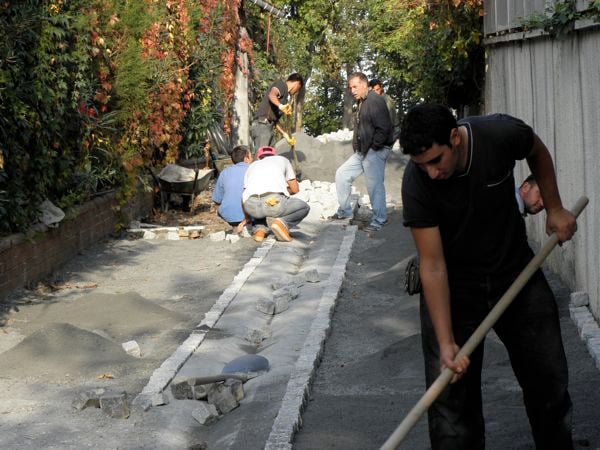
The Crusaders in action

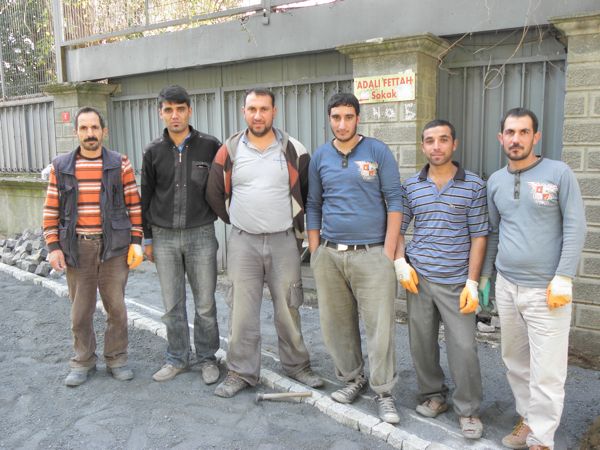
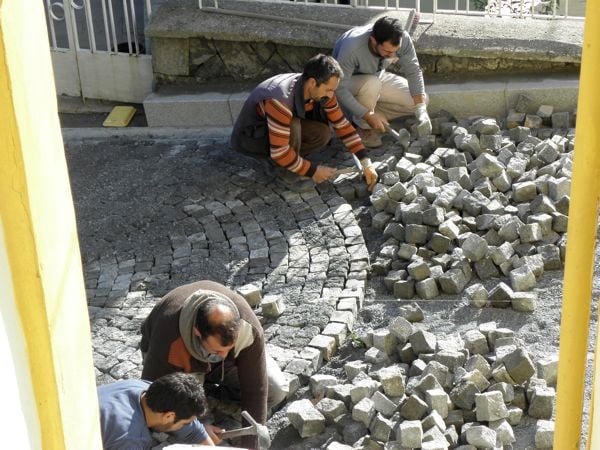
Back to the Crusaders (The Dudes). I’ve been snapping photos of these guys all summer, so most of them recognize and greet me. They asked me to take a picture of them on Sunday as they completed my road, Adalı Fettah Sokak. They’re eager to see my blog—I gave them business cards with my web site on it. I may also bring out my laptop to show them tomorrow, if I get home on time…

The Dudes

A Sunday group shot, by special request

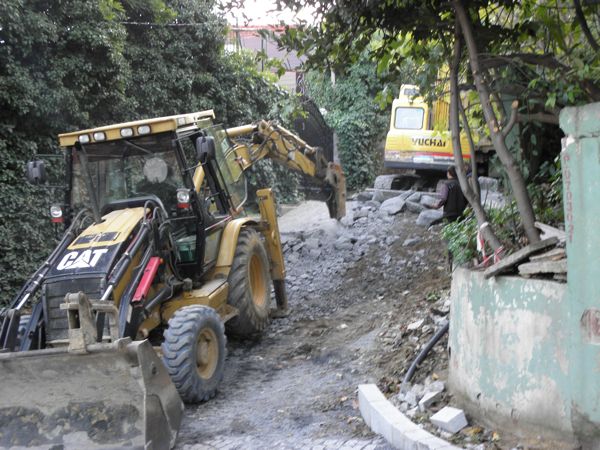
So here’s how it all works. First the big guns come in: The heavy equipment includes a big old jackhammer-type hydraulic excavator, and another one with a Mike-Mulligan-type shovel, working in tandem to rip up a section of the old street. There’s pavement on top, sometimes concrete, and then below is another layer of big old stones and bricks. It’s a MESS!

ripping up the street

Ripping up the street below my apartment

They’ve had the devil of a time with the rain, too. What’s very different about this, though, is that these machines barely FIT in the street, and they actually let people walk through while they’re working—no safety codes here! (It’s the only way you can get home.) They close the street to cars only where they’re presently working, and it’s rare to have any warning before you get to the top of the hill and find that the road ends. Local drivers are experts at backing down steep, windy roads; there’s no way you could ever turn around in these streets unless you were riding a trike.

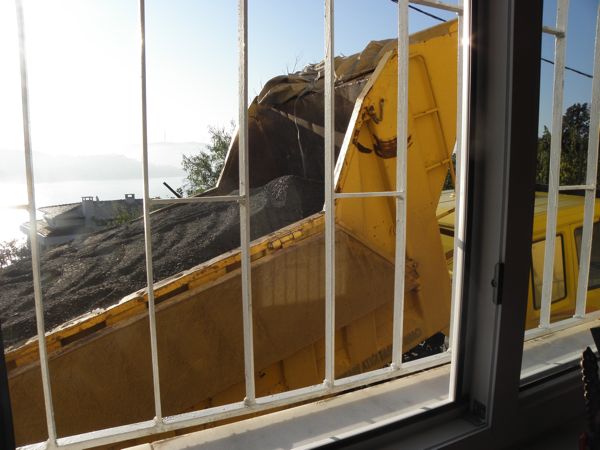
outside my window

Narrow street = Dump truck dumping just outside the window

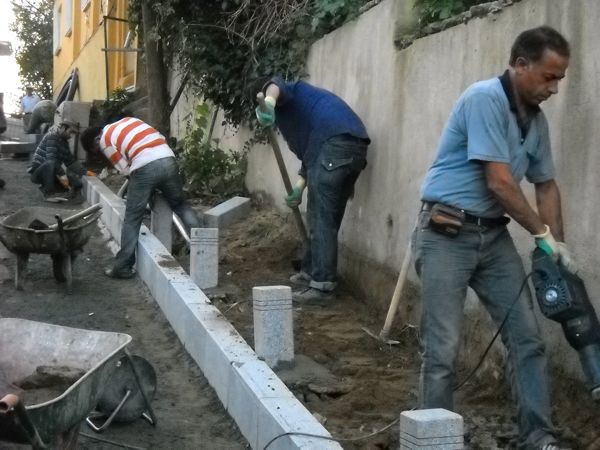
From that point on, most of the labor is done by hand. First heavy granite curbing and drainage pieces are placed in the road and cemented in. Any questionable spots in the road are also cemented—generally with cement that’s been hand mixed (although I did see a cement truck the other day).

mostly just working by hand

The Dudes install curbing just below my apartment.

Next a dump truck brings in loads of finely-crushed gray gravel and dumps it on the road. The workers shovel it into one of their four beat-up wheelbarrows and spread it on the road with spades, in preparation for the load of granite cobblestones that comes next.

The beat-up wheelbarrow

The ancient, battered wheelbarrow

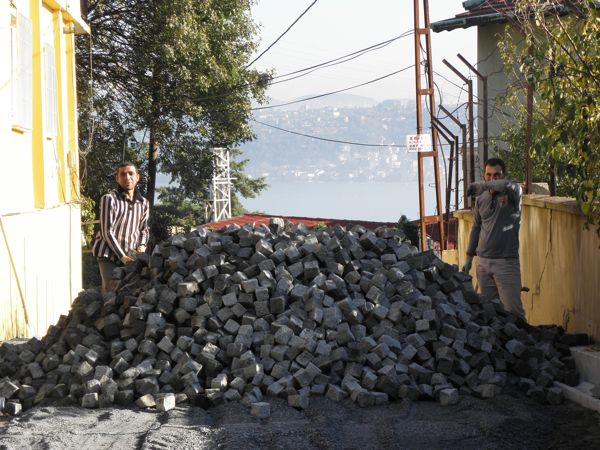
a cobble pile-my apartment on left

A load of cobblestones just dumped outside my apartment

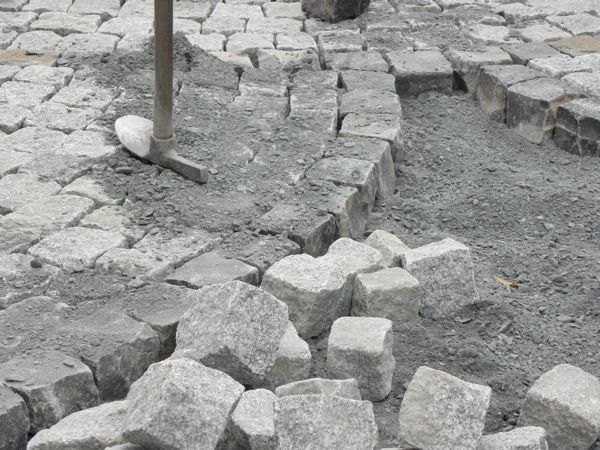
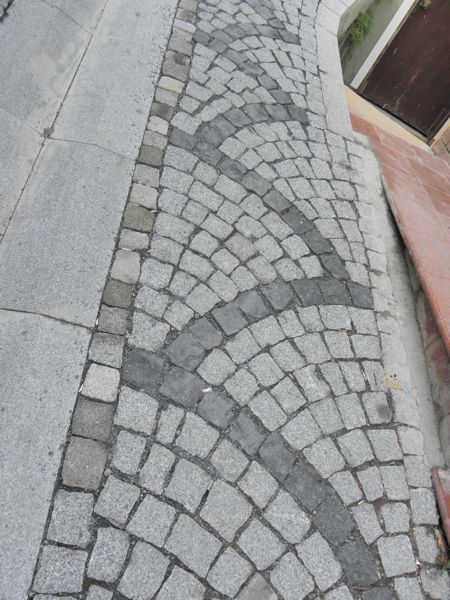
Each 4-inch rough-cut stone is arranged in a wave-like pattern, tapped into place with gravel sprinkled between, darker stones periodically accenting the picture. These four Cobble Dudes can place about 100 feet of cobbles in a day—amazing. Rebuilding the roads of Arnavutköy seems a never-ending task, though they continue to forge on. It’s always a surprise to see which road is closed each week.


cobbles

The wave-patterned cobblestones

Friday night I got home after dark, and the team was pounding cobblestones by the light of street lamps. They worked from 8 to 8 that day, when they’re usually done by 6 or 7. I wondered if maybe they took time out to go to the mosque, since Friday is their holy day. I just don’t know. Maybe they had a goal to reach.

night cobbling

Night workers—Friday only

After everything is in, the steam roller comes through—probably the noisiest of all the equipment. He rolls back and forth over the stones, setting them flatter into the gravel. Then—they move on.

outside my door

Saturday morning I woke to them cobbling at the bottom of my steps.

A friend at school is convinced that the owner of a granite quarry has a connection with some high-up mucky-mucks, because this is a HUGE project, and somebody is making mega-bucks off of it. The city looks much better with its new marble curbs and granite-cobbled streets, though, and the rough stones offer better traction for both cars and feet. (Not surprisingly, there are a LOT of 4-wheel-drive vehicles in my neighborhood.)

new cobbled street

A finished product near my street

So—this is my latest news: a spanking, new road.

Libby’s happy to see the mud gone, too—no more foot scrubs after every walk.

IMG_2988

Miss Libby—happy!

Getting to the meyhane

Friday evening didn’t start off all that well for me. I need new glasses (badly), so after school I trekked over to Kadıköy to visit a recommended optician. Well, the glasses appointment took a bit longer than I’d planned—mainly because Ali Bey spent a long time talking me into some very cool glasses, then dropped the price bomb. $1100. Really. “NO WAY!” I said. “I’m only a TEACHER!” (in Turkish, of course). Who spends that kind of money on glasses? Not me. It meant we had to start all over again, but in my price range. Sigh…

P6130055

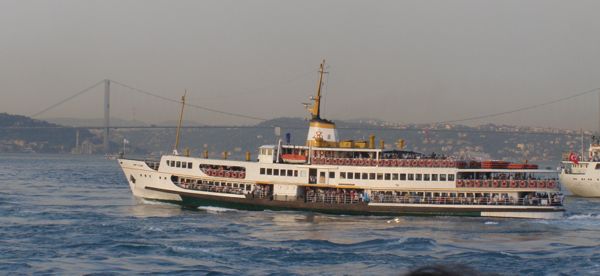
The beloved Istanbul Ferry from the European to the Asian side

Frazzled, I hurried to the ferry, crossed the Bosphorous, and hopped a bus. I nearly sprinted up the hill to my apartment to take a quick shower and get Libby out for a short walk. It was 8:30. The dinner at the Mehane was starting at 9:00, and there was no way I’d be there on time. Geez–I thought I’d had so MUCH time to spare. Typical.

So, anyway, I trekked back down and got to the bus stop about 8:45. Not too bad. I texted Erica that I’d be a little late, then waited. And waited. And waited. Sigh…

At long last a VERY packed bus pulled up. As I rode (sardine style), I debated taking the funicular up to Taksim Square, but my recollection was that the restaurant was near the lower end of Istaklal, so I decided to go a bit further and take the Tünel up from Kabataş, which I thought (wrongly) would put me closer. Imagine my reaction when I got off the tram and realized that the Tünel was closed. ARAUGHHH!!!!

DSCN0292

The Galata Tower at night (halfway up the hill)

That meant I had to hike up a steep hill of narrow cobbled streets past the Galata Tower—alone. I noticed a woman about my age just ahead of me, so I caught up with her and started chatting. An English teacher, too, she was just returning from an evening school event. She was interesting—I wish I’d asked for her card. Oh, well…

Long story short, after much MIS-direction, I FINALLY found the meyhane, which was actually closer to Taksim Square than I’d thought. I arrived around 10:00, exhausted, sweaty, and starved. Everyone was well into both devouring and imbibing, and the meyhane was in full swing.

DSCN0319

A hearty teacher’s welcome!

DSCN0329

The lovely Melissa with her Turkish husband Orhan

“What’s a meyhane?” you ask.

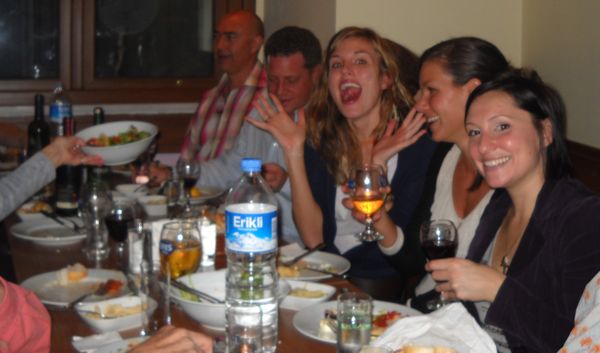
Good question. It’s a Turkish restaurant that serves alcohol, generally a fairly rowdy venue. Also known as a tavern or cabaret, many meyhanes offer live music, and it’s not uncommon to have people dancing on the tables before the evening is out. The Çardak Meyahnesi was no exception. My friend Erica and her husband Erdem had organized the evening for us,

DSCN0320

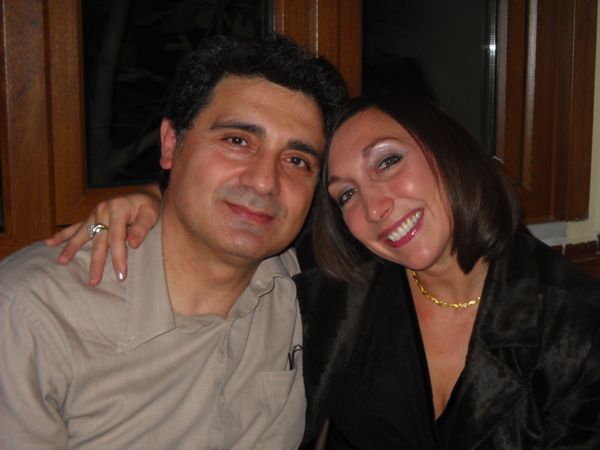
Erica and Erdem, our evening hosts

a group of about thirty teachers and friends enjoying mezes (hors d’oeuvres), dinner, drinks, and live music for an all-inclusive price of 60 YTL ($40). We were a mix of yabancis (foreigners) and Turks, all sharing the same love of interesting company, good music, dancing, and laughter.

I have to admit, Marita’s husband Duff was the star of the evening: the first to get up to dance, he kept bopping, imbibing, and beaming all night.

DSCN0318

Mr. Duff launching from chair dancing into the real thing

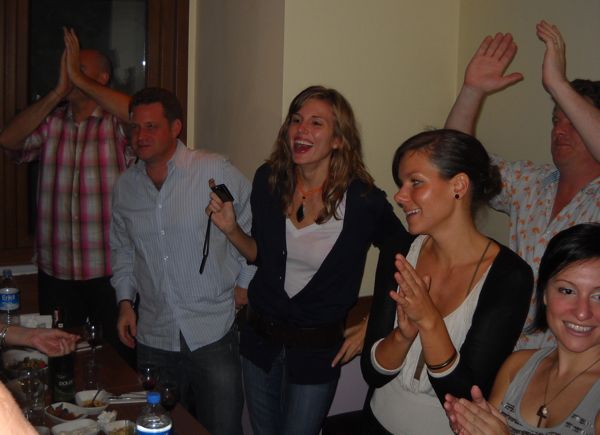
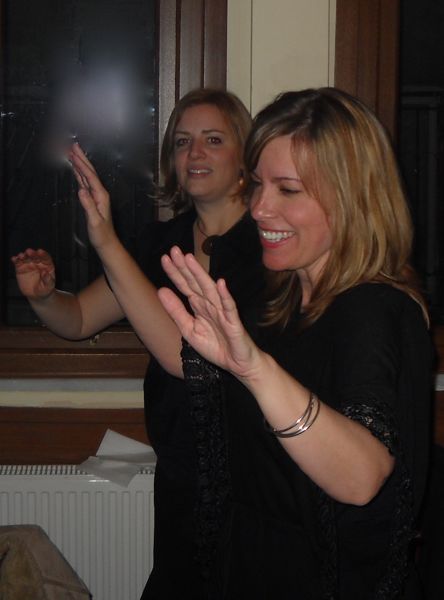
Turkish dancing is a little different from Western dancing; you keep your hands up and moving. It’s kind’ve a cross between Zorba and the hula, I guess. Following Duff’s lead, the rest of us got up and danced—and danced—and danced—until the wee hours.

DSCN0331

And soon we were all on our feet–note Duff in the background.

DSCN0342

Everyone danced the night away.

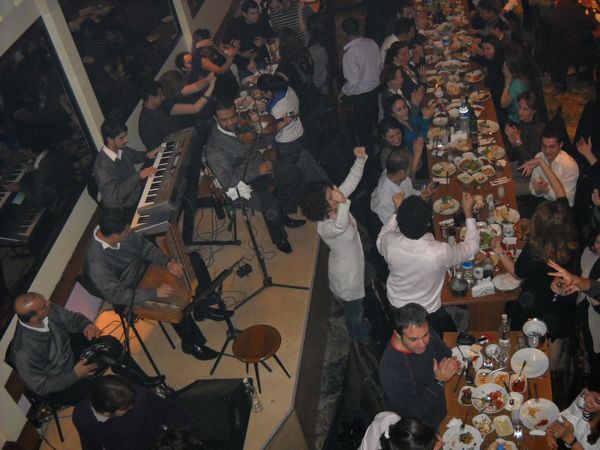
Food was continuously served throughout the night, as were a bevy of beverages. We merged with other diner/dancers on the balcony as the musicians played non-stop from 9:00 until who-knows-when. What stamina!

DSCN0327

Looking down on the musicians and diners on the main floor–oh, so dizzy!

So, my friends. That’s a meyhane.

I have to admit, I wouldn’t mind attending another one, but perhaps next time I’ll limit myself to ONE rakı. This traditional anise-flavored beverage is not to be taken lightly.