Ann Marie’s Istanbul

experiences in and around Turkey

Archive for the ‘Robert College’


Dalyan, sea turtles, and adventures

An English teacher on a biology trip? Go figure! I just returned from a school ecology trip to Dalyan, on Turkey’s Mediterranean coast. Lovely. More than lovely.

We arrived late, just in time to hear Turkey’s soccer team beat Croatia in overtime, winning a spot in the European Cup semi-finals. The streets immediately filled with celebrating fans honking, chanting, singing, and waving flags. The owner of the Metin Hotel found it a bit deli—crazy. We loved it.

Celebrating soccer fans in the streets of Dalyan

The first morning dawned bright—and hot. Temps were in the high 80’s and 90’s all four days (28 to 35 C.). Luckily, we were mostly in and on the water, the focus of this biology trip (the fourth annual) expertly organized by Gaby McDonald, a South African biology teacher at Robert College. Our eight students were joined by seven science teachers-in-training from Bilkent University (with supervisor Margaret Sands). The plan for the week included two days of hands-on biology activities with follow-up sessions, then two days of recreational adventures. We were also privileged with a night visit to the beach to see loggerhead turtles lay their eggs; the beaches are off-limits to anyone but researchers during the nesting season.

Gaby runs one of many information/feedback sessions on ecological studies.

Back to the first day. After an introductory session by Gaby and her assistant, Noah Billig, we slathered ourselves with sunscreen and walked three blocks to the wharf. Students carried the two huge wooden crates filled with scientific gear. Captain Ramazan welcomed us to our boat/classroom, and we marveled at the ornate tombs carved into the marble cliffs across the waterway. Gorgeous!

Picturesque marble Lycian tombs dominate the veiw from Dalyan.

The day was devoted to water samplings, vegetation surveys, and river current measurements—a mammoth task, in my mind. We moored near a group of sheep clustered in the shade, and from there the work began. One team hopped into a small boat with a long rope to measure the width of the river, then measure the depth at 5 meter intervals as they rowed back from the far shore.

Captain Ramazan rows two girls across the river to measure width and depth.

Another group set up meter-sized quadrants to survey the vegetation along the shoreline (and in the water).

Investigating vegetation within randomly-placed quadrants.

Once those tasks were completed, we headed out to the middle, where water samples were taken at varying depths and analyzed on a number of scales to determine clarity, salinity, phosphate content, etc.

Scientific equipment aids water measurements.

Lastly, six students jumped into the river to help measure the current. The rope with meter measurements was stretched along behind the boat, and pairs of students were posted at 5-meter intervals. Another student dropped two oranges into the water while a second used a stopwatch to time the oranges’ progression along the rope. The process was far slower than expected, and one orange did little but circle below the boat. Our determination was that the wind was counteracting the current or there was little current. We’d discuss possible reasons for it later.

Students continue water samplings from the boat/classroom.

We repeated the water quality tests halfway down the river, where we also wolfed down our lunch of tomato, cucumber, cheese, and salami sandwiches. The Turkish bread is always fresh and crusty, and beyaz peynir (white cheese) is delicious—YUM!!!

Finally, we reached the Mediterranean, where we were set free for a few hours to enjoy the beach and the waves. The sea was much more refreshing than the river’s warm water. We did one final water test just inside the inlet, then motored home with many exhausted students fast asleep.

Tourists enjoying Dalyan beach

After returning home we showered, napped, and held a follow-up session to analyze our data. It was clear that water temperatures, phosphates, and turbidity levels (lack of clarity) were higher upstream, away from the sea. Of course, this also contributed to higher vegetation levels. Students discussed the importance of controlling pollution in the river to maximize the populations of aquatic animals that contribute to the ecosystem.

Pensive students (Squeak and Ayse) during a feedback session.

We then enjoyed the hotel’s scrumptious buffet (mezes, Turkish hors d’oeuvres, are my favorite, so I focused on those). Later we gathered at a local karaoke bar for Gaby’s powerpoint on sea turtles, a focus of much of our research. Loggerhead turtles are amazing. They can live up to 200 years (though the average is 30-60) and can weigh up to 350 pounds. They reach sexual maturity at about 30, and females nest every three years, laying up to 35 pounds of eggs, often in three separate nests. Loggerheads often migrate thousands of miles, although the females return to the beach of their birth to lay their eggs. Recent satellite transmitter data has shown that Turkey’s turtles migrate to Tunesia. It’s interesting, too, to note that loggerhead hatchlings increase their weight more than 6000 times from birth to adulthood. If we did that, we’d weigh about 42,000 pounds.

Crab bait awaits.

Sunday was crabbing day. Ramazan piloted the boat as he tied chicken skin and a heavy nut (hardware) onto lengths of fish line. Once we were anchored in a choice location, the eight lines were thrown into the water around the boat.

Within minutes, five students were reeling in blue crabs, which Ramazan expertly netted and brought to the surface.

Captain Ramazan beams after netting a blue crab.

Gaby taught us how to determine the sex (yup—it’s pretty easy), whether the females were in berry (with eggs), and how to measure the carapace (shell). After noting all the features of each crab, its shell was marked with fingernail polish and it was placed in a bucket, where the morning’s catch soon became a knot of inter-connected pincers and shells. After an hour and a half, a mere 14 crabs had been caught. Ramazan dumped them back in the river to burrow into the mud.

Students measure and mark blue crabs (Ayça and Lal)

We once again headed to the beach for lunch and a swim—ah, the refreshing Mediterranean! The beach, by the way, has rules against putting up sun umbrellas, as they might bore into a turtle nest. They have permanent wicker umbrellas with wooden beach chairs available, otherwise it’s full-sun exposure.

Dalyan beach’s “official” beach umbrellas and chairs

We returned to our crabbing spot to catch crabs again, though with disappointing results—only 4 crabs caught. One of the four was already marked, so using the ratio of pre-caught to repeatedly caught crabs, we computed the population of the 100 square meter area to be about 52 crabs, the same computation as the previous year, although they had caught 50 (compared to our measly 18.) Interesting. Our biggest concern was that none of the females were in berry. Why?

After we returned to the hotel, we had another session to evaluate the results, and groups of students proposed methods of preserving the crab population (the loggerheads’ favorite food).

A post-discussion group photo of young biologists

That night half of us left for the beach with Bekir Bey, a ministry official who Gaby has worked with over the years of this project. Under his escort, we were able to get past the gates onto the beach, where a team of researchers from Pamukkale University are studying loggerhead turtles. They scout the 3-kilometer beach every night, watching for turtles that come in to nest. It’s important to catch each turtle before she covers her nest, as she does an incredible job of throwing sand behind her and over the nest, making it difficult to determine where it is. Although loggerheads are easily frightened away as they search for a nesting spot, once they begin laying, they are in for the count. As they lay their eggs, researchers take measurements and either mark new turtles or snip a sample of tissue from the hind flipper of turtles that have already been marked. Once the turtle has returned to the sea, the researchers dig down about six inches toward the well-covered nest and lay a metal grid over the nest to protect it from fox or other predators. The grid is spaced wide enough to allow the hatchlings to wriggle through, though narrow enough to prevent animals from stealing the eggs. In 55 days the researchers will revisit the nest, then try to protect the hatchlings as they head toward the sea. Unhatched eggs are used for study. Did you know that a sea turtle’s sex is determined by the temperature of the egg’s environment? Let’s see…I think the females are the hotter ones… (29 degrees is the dividing line.)

//upload.wikimedia.org/wikipedia/en/e/e7/Loggerhead_close_up.jpg” cannot be displayed, because it contains errors.

Photo from Wikipedia: http://en.wikipedia.org/wiki/Image:Loggerhead_close_up.jpg

The moon rose around midnight, charming the beach as we waited to see our turtle lay her eggs. She laid her eggs quickly, so researchers had to do measurements as she headed back to the sea. I wasn’t allowed to use a flash, but I got a few time exposures in the dark that showed the her silouhette as they worked with her.

Time exposures of our female loggerhead turtle being measured after leaving her nest

Our last two days were fun, fun, fun. Monday we went white-water rafting (a 3-hour drive, but WELL worth it.)

Rafting photos by Alternatif Outdoor Rafting

On the last day we went sea kayaking, a new adventure for most of us. I could have stayed out there all day, but we paddled for only a few hours, exploring one of the most picturesque coves of the area.

Too much information, I know—but it was WONDERFUL! I learned a lot about turtles, about ecological balance, and about traveling and adventuring with Turkish kids. I was once again reminded of Turkey’s varied and spectacular scenery.

Thank you, Gaby!

Ah! The Bosphorus!

I’m going to the Asian side to visit friends this evening (about 8 miles as the crow flies), and believe it or not, it’s FAR faster to do the trip by ferryboat than to hazard the Istanbul traffic. It’s one of the beauties of living on the Bosphorus. Let’s see…would I rather stand, sweating, on an overcrowded bus as it creeps along the shore road, or sit on the open deck of a ferry boat with a fresh Bosphorus breeze on my face? Hmmm…

My view overlooking the Bosphorus

My view overlooking the Bosphorus (Kuleli Military Academy)

The Bosphorus has become a huge part of my life here in Istanbul. Not only does it provide transportation and a lovely place to walk, it offers a spectacular view from the Robert College campus. What a lift it is to look out over the Bosphorus from the school each day—unreal! Though it’s an altitudinal challenge, I have resolved to walk down to the Bosphorus every day—just because I can. My record is slightly less than perfect, but it’s been great.

A Bosphorus sailing regatta—a rare occurrence, happening only a few times a year.


It’s amazing to live above the busiest waterway in the world. Although it’s actually a strait, it looks more like a huge river with hills towering on each side. Twenty miles long, the Bosphorus is always busy with tour boats (speakers blaring in every language), ferries (much quieter), day/night cruises (traveling cocktail and dinner parties), and commercial ships plying the lanes both north and south. Some of the container ships are of mind-boggling size, to say the least. And believe me, they leave a mega-wake.

The bustling, busy Bosphorus–at Rumeli Castle

The Bosphorus connects the Black Sea with the Sea of Marmara (about the size of Lake Superior). It has formidable currents—I often see the water’s surface churning. Apparently there are double currents, with less saline waters flowing down from the Black Sea at a velocity of 1-2 m per second, while the Maramara’s more saline, denser water flows north at lower depths nearly four times as fast (from the Encyclopedia of Ukraine). Expert Bosphorus pilots are ferried out to each ship as it enters the waterway to guide them up (or down) the Bosphorus, disembarking at the other end to board another ship for the trek back.


A spectacular yalı (Bosphorus waterfront mansion)


But the charm of the Bosphorus is more than that; it’s the lovely yalı (old mansions) along the water, the fishermen (and women) casting along the quay, and the pleasure boats.

Fishermen on the quay…

…and others fishing from boats.

It’s seaside restaurants and tea gardens, the ever-changing lights on the first bridge, and the ornate Ortaköy mosque. It’s beautifully lit historical buildings at night—ah, the Rumeli Castle (I just learned that “rumeli” means European, with roots back to the Orthodox Christians), and the moon rising over the hills.

My friend Annie and her daughter, Jess at the Rumeli Castle

Unfortunately, it has some problems. It’s choked with jellyfish and too much trash, which will hopefully change before long. (Istanbul is making great strides in recycling and clean-up.)

Jellyfish abound in the lee of the yachts along the quay.

My home at Robert College in Arnavutköy overlooks the Bosphorus, with the Kuleli Military School dominating the view, especially when it’s lit at night.

It’s amazing. It’s inimitable. It’s the Bosphorus.

My night view—Ah! The Bosphorus!

Such a different kind of spring…

As my friends back in Minnesota shovel yet another few inches of snow off their decks, I marvel at each new blossom on the Robert College Campus. Today we had a fire drill—remember them from your school days? Well, they’ve always been a part of my life. The entire school filed (relatively quietly) out to a small outdoor arena where attendance was taken, we were told it wasn’t a drill after all (Hmmm…today was April Fool’s Day), and we were excused to return to the building. At any rate, on my way back up to the school, I passed a tree covered in huge, lavender trumpet-shaped blossoms, each a few inches long. It was gorgeous—something I’ve never seen. A number of the trees here blossom before any leaves emerge, and the result is spectacular, particularly to one unaccustomed to leaves until the first of June!

p4010003.jpg

Just outside my window is a tree lined with yellow blossoms (though this one has leaves), and on the other side of the building is a bush garbed in brilliant red blooms. Nearly every plant seems to have some kind of bud or blossom. In Minnesota I’d know the names of them all, but here I just marvel. Even the budding leaves here fascinate me—so different! (One pesky plant is familiar—bedstraw, better known to me as Velcro plant—which clings to Libby’s fur every time she ventures off the path. ARAUGHHH!!!!)

p4010007.jpg

p3300010.jpg

p3300045.jpg

p3300055.jpg

p3300050.jpg

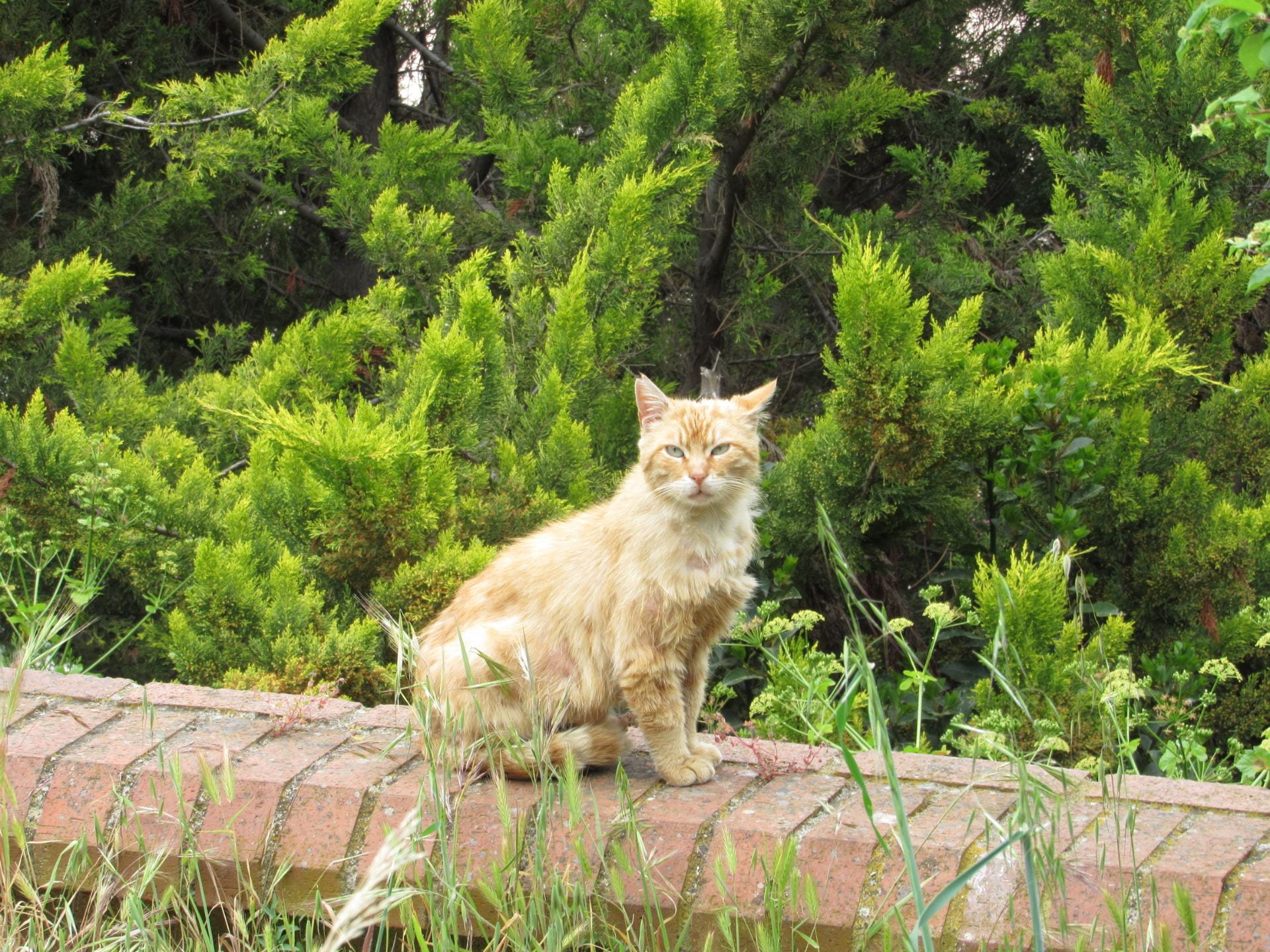
As I wander with my camera, Libby’s mission is the campus cats, most of whom know her too well. A little black cat escaped into a tree the other day; chalk one up for Libby. Reportedly our campus hosts seventy cats (mostly strays), nearly equal to the population of on-campus staff. No stray dogs, though—only pets. We even have a cat committee, pledged to catch and neuter every last one. Seems a monumental task, especially as I hear the Tomcats’ lustful yowls at night.

p3300024.jpg

I hear something else at night here, too: the melodic strains of a songbird. Could it be a nightengale? That, too, is a new experience for me, a warm welcome as I wearily climb the long hill to my apartment after a night on the town.

One last note—another sign of spring in Istanbul. While walking with friends near Taksim, we saw a huge crowd of people (mostly men) standing on an overpass. Fishing? Emergency? Accident? Nope. It was the uphill soccer fan crowd, enjoying free nosebleed spots above the stadium—standing room only. There were even police to control the crowd of hundreds. Too funny!

p3300062.jpg

We bypassed the cheering soccer crowds to visit the Pera Museum, where we browsed through a fascinating exhibit of the works of Czech photographer Josef Koudelka. Our tour finished with a flourish: a goodly gawk at The Tortoise Trainer by Osman Hamdi Bey. One of my favorite paintings, it was purchased four years ago by the Koç family for $3,500,000 (certainly the most valuable Turkish painting). I’ve read that it depicts Hamdi Bey’s frustration with Ottoman leaders of his time, intimating that they were as difficult to change (westernize) as training tortoises with a flute (turtles can’t hear, you know, and their hard shells protect them from prodding).

p3300065.jpg

Osman Hamdi Bey was not only a gifted painter, but he was also an intellectual who organized numerous archeological digs in Anatolia (later Turkey) and founded the Istanbul Archeological Museum. Pretty impressive (in spite of the leaders who thwarted his efforts).

We ran into a few friends at the Pera and trekked off together for wine and a light meal in a quaint rooftop café a few blocks away. It was a good day. A great day.

All Things Turkish

Since my computer fiasco put me a bit behind in my weekly missives, I decided to share a piecemeal look at the past few weeks. I’ve been exploring the area, connecting with old friends, and making new ones. All in all, life is good here in Istanbul.

I joined a group trek to the Halk Art Copper Factory (my third visit) a few weeks ago and came away with some exciting finds. After exploring the entire three stories of new and antique copper wares (thousands of items), the salesmen carried our finds down to their showroom, which displays just one or two of each item. My favorite find was a project for the future. I purchased 40 assorted tempered copper squares that will become a mirror frame once I get home. The copper factory’s ready-made mirrors are gorgeous, but they weigh a ton (serious shipping expense). My other purchases (mostly gifts) were less heavy, but nearly as beautiful.

p3150058.jpg

Copper warehouse shelves of antiques

p3150087.jpg

Halk Art wares in their showroom

Let’s see—I’ve also been doing daily hikes with Libby, morning and evening. We walk down to the Bosphorus every day, and often we head up to the plateau, arguably the most gorgeous spot on campus. Beautifully manicured trees and lawn surround a new running track, but the highlight is an incredible vista overlooking the Bosphorus.

p3190003.jpg

The spectacular view from the plateau

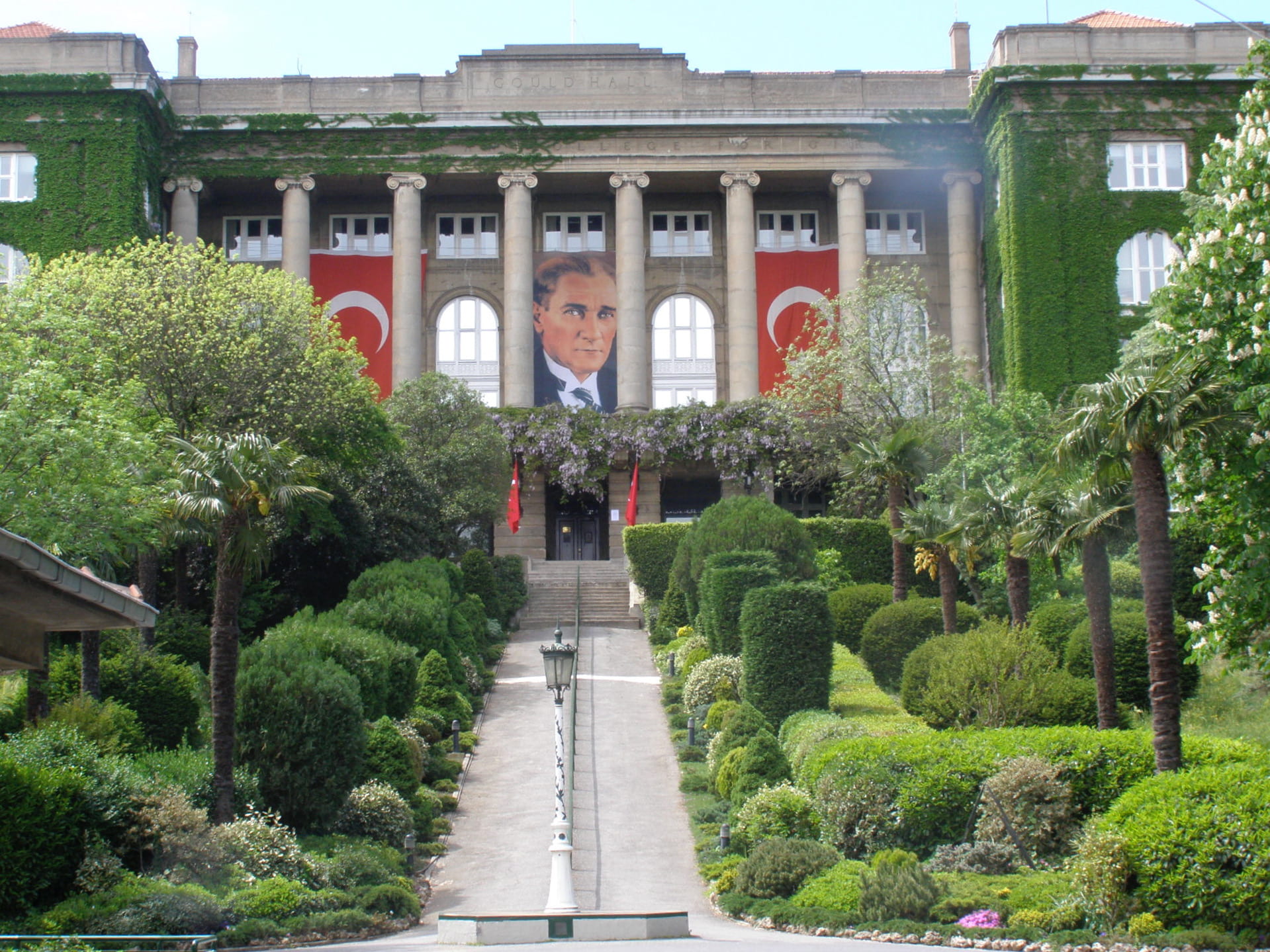
Last week (March 18th) was a Turkish holiday, Çanakkale Day, which marks the Turkish victory over the allied forces at the end of World War I. It was shortly after this bloody battle (Aussies marked particularly huge losses) that Mustafa Kemal Atatürk founded the Turkish Republic. On Turkish holidays every public building is draped with Turkish flags and huge banners of Atatürk, and Robert College is no exception. The patriotism in this country is impressive, in spite of the threat of a growing movement against Atatürk’s secular principles.

p3190005.jpg

Atatürk graces Robert College’s Gould Hall

Last Friday I ferried to the Asian side with a few Robert teachers for a performance of Jean Anouihl’s Antigone at Üsküdar Academy. It which was a fascinating modern version of Sophocles play, adapted to World War II. Afterwards, we ferried back to the European side to catch some wine and spirited conversation (there’s little of the former to be had in Üsküdar).

Saturday I spent the day with Tony and Marnie Paulus, friends who will be leaving Istanbul for a new life in Florida. I showed them around the campus, then we basked in the sun, enjoying the spectacular view of the Bosphorus. Next we headed up to the park at Emirgan to check out the latest development in tulips (lovely—again!)

p3220012.jpg


p3220030.jpg

Not exactly a tulip, but gorgeous nonetheless—

(Actually it’s Fritillaria imperialis rubra maxima, in case you care!) 

From there we headed to Sultanahmet and wandered near the Grand Bazaar. As Koç School Director, Tony seldom gets to explore these areas, and he enjoyed it. We capped off our day with a dinner at the Taş Han’s Arkat Night Club—stageside seats, (thanks to my friend Kemal Ocak) for a floor show for singing, belly dancing, folk dancing, and EVERYBODY dancing. It was great fun, but we old fogies bowed out long before the bulk of the crowd.

p3220060.jpg

Yet another Turkish flower

As you can see, I’m staying busy. I’ve devoted much of the past two weeks to correcting Yearly Homework Projects, poetry projects, and English exams. (I figure about 30 hours total.) I try to keep my paperwork at school, but during exam time, it’s impossible. Ah, well, I chose to be an English teacher, didn’t I? I’m not complaining, mind you. I still love teaching, and heck—it’s my ticket overseas!

Snow-blown Istanbul

After a 24-month hiatus, Winter has rediscovered Istanbul—and it’s great fun! We’ve been teased with snow flurries all week, whetting everyone’s appetites for the inevitable cancellation of classes. In recent years school has been called off at any hint of snow (due, I am told, to a child’s death on his way home from school during a snowstorm).

The first year I was in Istanbul, we had a snow day for mere flurries (by Minnesota standards). Then when we had an actual blizzard in January, we got a full week off. Of course, you must remember that this is a city without snowplows—and with precious few snowshovels. People use spades, brooms, squeegies, and dustpans to remove the snow. Believe me, it’s a backbreaker to clear your driveway with a dustpan! I think we had eight snow days that year, then last winter we hardly saw a snowflake. But Winter has returned.

snow-removal.jpg

City snow removal, winter 2006

Yesterday (Saturday) it snowed off and on all day, but since it warmed up mid-day, much of the snow melted away. I went into the city to meet a few former Koç students for a late lunch (such a joy!), then hooked up with friends for dinner. Amazingly, in spite of the storm, I got back to campus in just over an hour, climbing the hill through a mere inch of snow.

p2160019jpg.jpg

Saturday hiking down to Arnavutköy from Robert College

This morning, however, I woke to an amazing winter wonderland: three to four inches of heavy snow, blown by blasts of wind from the Bosphorus. There’s always wind in Istanbul, but particularly after a snowstorm, I guess. As a Northern Minnesotan I’m more than accustomed to snow (we have it five months each year), but here it’s a real novelty, even to me! Robert College has a snowplow (after all, it IS an American school), and the maintenance crew ran it up and down the winding, cobbled roadways all morning long, trying to keep pace with the snowfall.

p2170025jpg.jpg

Libby waiting patiently for our morning walk

As my dog Libby and I trekked through the storm this morning, she was thrilled with the return to “normalcy” in her life, cavorting with the snow like a long-lost friend. We checked out new routes around campus, and I realized how incredibly steep some of the campus roads are. There’s one section that’s so steep the guards set up barriers and plowed around it, across drives behind the buildings. I picked my way down that steep section, which was a little like descending a snow-covered mountain peak. I’ll be amazed if we have school tomorrow.

p2170034jpg.jpg

Deciduous shrubs and trees struggle with the heavy snow.

The guards were jerryrigging chains to their “guardmobile” tires as we walked by the main guard station, and NO one was driving the school roads—except for the taxi we called to bring us to a grocery store. Our service bus to IKEA and REAL was cancelled this morning (weather, of course), so one of the bilingual teachers called for a taxi—WITH snow tires. No thwarting a Robert teacher’s plans!

p2170044jpg.jpg

—a splash of color in a white world

Well, my first week at Robert College is behind me, and my groceries are all put away. Though I’m not sure I need a day off quite so soon, I’m open to the idea, as any self-respecting teacher or student would be. I have papers to correct, planning to do, and maps to finish for my latest book project. I guess I could use the extra time. Who couldn’t?

Welcome back to Istanbul, Winter.

p2170029jpg.jpg
A snow-swept patio overlooking the frigid Bosphorus

F.Y.I.—School was cancelled. HOORAY!!!!

Back for another teaching stint

Well, we’re back in Istanbul! Though I was a nervous wreck about sentencing Libby to 16 hours in cargo (KLM said she was too big for the cabin—what????), we both managed, arriving mid-day Thursday after a 24-hour trek from Grand Marais. We’re settled into our little apartment-with-a-view at Robert College, a highly prestigious and incredibly picturesqe preparatory high school located high above the Bosphorus.

I was warmly greeted by Maria Orhon, Robert College English teacher and Academic Director. Imagine my dismay when I realized that she had a small Toyota (with a driver) to transport the two of us (three with the driver), Libby and her kennel, and five suitcases and crates. Oops! We had to hire a taxi to get everything to the school, though Maria was more than gracious about it. After giving me some time to squeeze everything into my apartment, she chauffered me to a nearby Migros grocery store, then later treated me to a meal of mouth-watering fish cakes and grilled turbot steaks. YUM! And— Eftalia, the lovely Bosphorus fish restaurant, is within walking distance of school! Since I hadn’t had any exercise for two days, I bid Maria farewell at the school gate and hiked back up the hill to my lojman (apartment). I slept like a log, 11 hours straight.

Libby checking out our new digs
-

The word for the day at Robert College is STEPS! Yesterday I walked back down to the Bosphorus, which is 10 minutes (and 167 steps) down the hill. The walk is lovely, with winding sidewalks and stairways lined in lush greenery: lawns, trees, and shrubs, punctuated by the occasional spray of spring blossoms. (Yes, it’s nearly spring here.)

robert-college-walkway.jpg

A bit of the 167-step trek up the hill to Robert College

-

The Bosphorus is amazing, too. The waterway that divides Europe from Asia (I’m on the European side), it has been the source of many a war because it connects the Agean Sea (to the west of Turkey) and the Mediterranean (South) to the Black Sea, providing access to Georgia, Russia, and many of the Baltic states. It’s also beautiful.

bosphorus-view.jpg

A view of Asia across the Bosphorus from our European campus

-

Libby and I strolled the waterfront for an hour, watching fishermen catch hamsi (anchovies), meeting stray dogs (all friendly), and just generally scoping out the scene. Private boats of all shapes and sizes line the quay, and I noticed that many are floating restaurants. Have to check those out later.

boats-along-the-bosphorus.jpg

Boats lining the Bosphorus quay

-

I spent the afternoon working in the English office, preparing for my first week: poetry for the non-fiction classes and Bless Me, Ultima for the fiction class. I’m eager to get back into the classroom, and this new semester offers a new beginning to all of us. I’m replacing a teacher who left (reluctantly) because Turkish law forces teachers to retire when they turn 65. She left things totally organized for me, with little notes everywhere. What a welcome! I feel truly embraced by the people here already. Of course, this is Turkey. They’re like that here.

p2080270.jpg

My five-month office corner

-

After a dicey sleep the second night, I putzed around my apartment, filling the walls with calendar photos (thanks to Aly) and reorganizing the furniture. Then Libby and I trekked up to the upper campus entrance—another 322 steps. Oh, my goodness! I’m going to get my exercise here, believe me. I was of the mistaken impression that the college was perched on top of the hill above the Bosphorus, but I guess it’s less than halfway up. A few very cranky dogs met us just outside the upper gate, but I picked Libby up and we ignored their snarls—well, sort of.

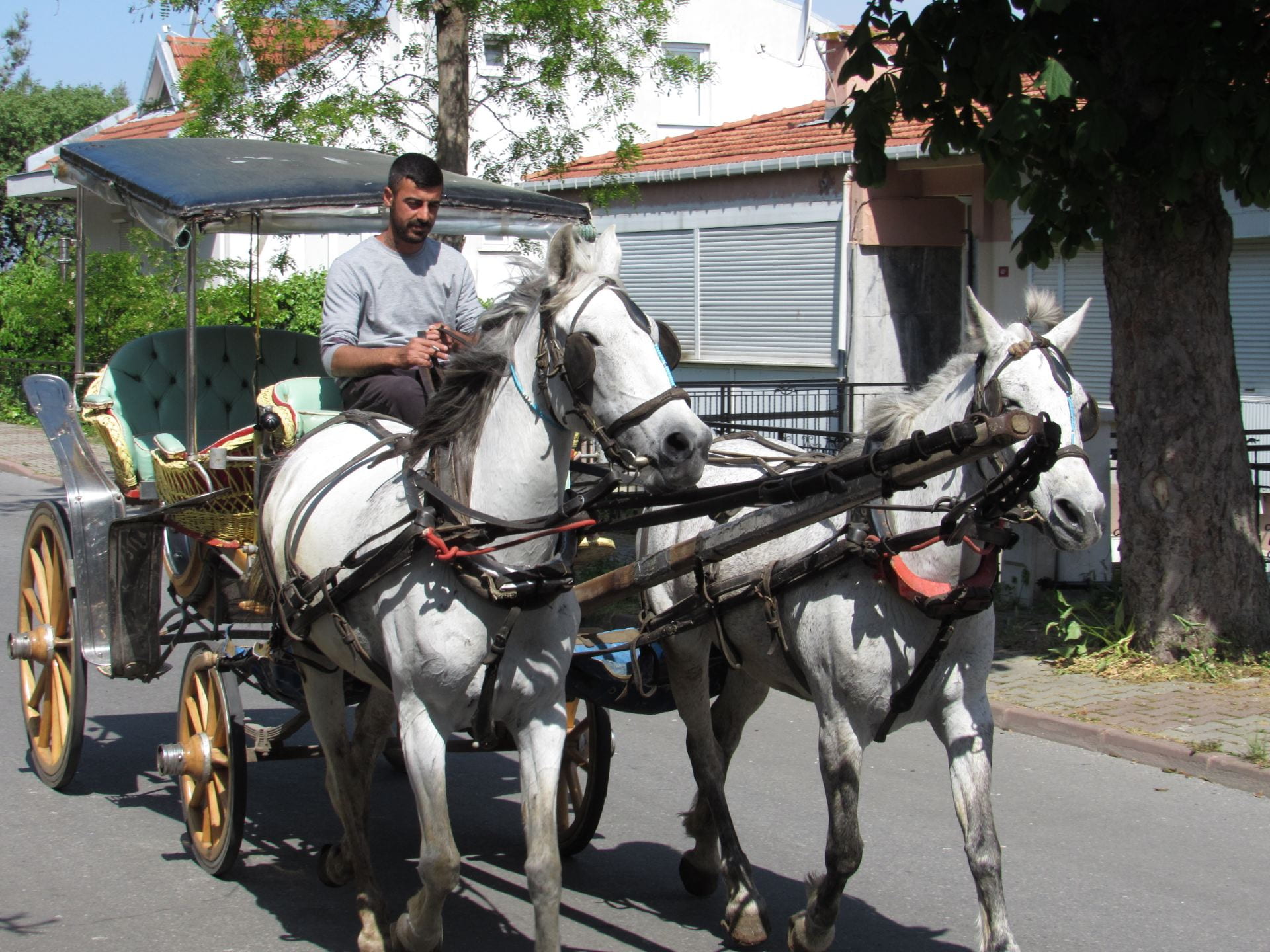
We explored the streets above the school, and I found another little grocery store. I picked up garlic, crackers, and pepper, carrying Libby through the store. I’m hesitant to tie her outside, as one nasty dog could do her in. I don’t think I’ll take her beyond the upper gates anymore. Not a great place for a little dog. (Though apparently it’s still a good place for horses!)

a-rare-sight-in-istanbul.jpg

A rare, yet intriguing sight in Istanbul—Speedy Delivery?

-

So here I am, champing at the bit to teach my four sections of 9th graders at Robert College. It feels good to be back in Istanbul, though issues abound here. (The latest is the parliament’s decision to allow women to wear scarves in the universities, which is upsetting to secularists, who see it as a step toward an Islamic state. More about that later.)

The call to prayer warms my heart, and Libby is now sitting at the window watching for Campus Cats, of which there are many. Each new citing intoxicates her; she’ll be happy here. Not many cats around the woods in Grand Marais. Just boring old deer.


Boreal Access Web Mailer